What is the MVP in Software Development? A Founder’s Guide
Creating a software product takes time, money, and planning. It is risky to launch a new product without testing customer demand if you’re a Canadian business. This can result in extra expense and missed opportunities.
CB Insights’ analysis of 500 venture-backed startup terminations revealed that product-market fit was cited as a reason for startup shutdowns in 43% of the cases. The discovery is one to watch, since it underscores the need to know customers’ requirements before investing in big projects.
An MVP, or Minimum Viable Product, is a key component in helping a business test out its idea with real users. Contains all the necessary features to address a particular problem. User feedback and input enable the founders to know what is successful and what they need to improve.
In this guide, you will learn what an MVP is in software development, how to create one, and why it is important for businesses. It also addresses the advantages, estimated development costs in Canada, and how to select the appropriate development partner.
What Is an MVP in Software Development?
A Minimum Viable Product (MVP) is an initial version of a software with basic features. It is aimed at addressing a particular customer issue. Businesses can implement it without building every feature for the final product. This lets them test their ideas and gather feedback from early adopters.
Minimum Viable Product software development is a way for founders to experiment with their concepts prior to investing in a full product. They are able to concentrate on the necessary features, steering clear of unneeded development costs. The less the MVP has, the better; it should be operable and give a good user experience.
For example, A food delivery startup may start by providing restaurant listings, menus, online restaurant ordering, and payments. These features enable customers to locate restaurants and order. Once they have gathered the feedback, the business can enhance its loyalty program and make individual recommendations.
MVP development enables businesses to base their decisions for launching a new business on actual users’ feedback. Founders can enhance the current features and know the most important features required by customers. This also helps them not to spend money on something that they may not need to use.
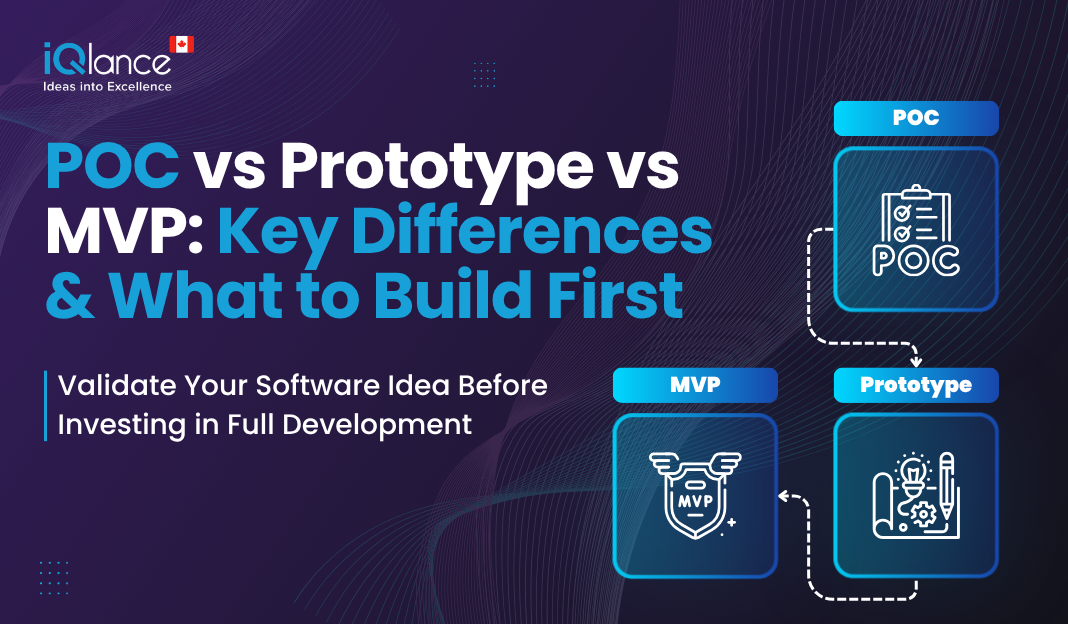
MVP vs. Prototype vs. Proof of Concept
There are various ways to test an idea for software before committing to a full-scale product. PoC, prototype, and MVP are all different. Awareness of these differences enables founders to decide which is the best way to go depending on their aims and finances.
Minimum Viable Product (MVP): An MVP is a product with just basic features that is run and tested. It is made available to actual customers to gather feedback and gauge customer desire. The results enable the founders to determine which improvements should be made next.
Prototype – a model that demonstrates how a product could function and look. Usually will have wireframes or clickable screens. Founders can use it to test the design and gain insight into how users navigate the application.
Proof of Concept (PoC): PoC is a test to verify the feasibility of a technical idea. For instance, a team can try to determine if an AI attribute is able to use data properly. This helps teams identify technical problems before development begins.
| Approach | Main purpose | Typical output |
|---|---|---|
| Proof of Concept | Test technical feasibility | Technical demonstration |
| Prototype | Test design and usability | Clickable screens or mockups |
| MVP | Validate customer demand | Functional product |
Which of the following strategies would you take?
Use a PoC if you want to determine if the technology does what you need it to do. Use a prototype for testing the design and user experience. Use an MVP when you need to get feedback from real users in order to test out your product.
What are the benefits of MVP Development?
An MVP is designed to test the ideas in a business before putting all the resources into the product. Founders can concentrate on necessary features and take learnings from real users. This will support them in their decision-making on future development.
These are the top 7 Benefits of MVP development:
- Reduced up-front investment: Companies invest in features they need rather than in the full product.
- Quick time to market: Founders can have their product out there and learn from early users.
- Market validation: Companies can verify if the product is required in the market and if the customers are willing to use the product.
- Real user feedback: Founders can get insights about what users like and what needs improvement.
- Improved product decisions: Feedback from customers can be used to make informed choices about future product development.
- Less risk for business: Business owners can find issues in early testing and avoid investing more resources.
- Potential for expansion: There is scope for growth of the product when there is a change in the needs of the customer or changes in the objectives of the business.
A fitness app, for instance, can start off with workout plans and progress tracking features. Once launched, you can analyze customers’ feedback and make sure you know what’s most beneficial. Then it can include customized training or nutrition tracking as needed by customers.
An MVP assists companies in learning early and managing finances. It also aids them in creating products around customer needs rather than assumptions.
So how does MVP software development work?
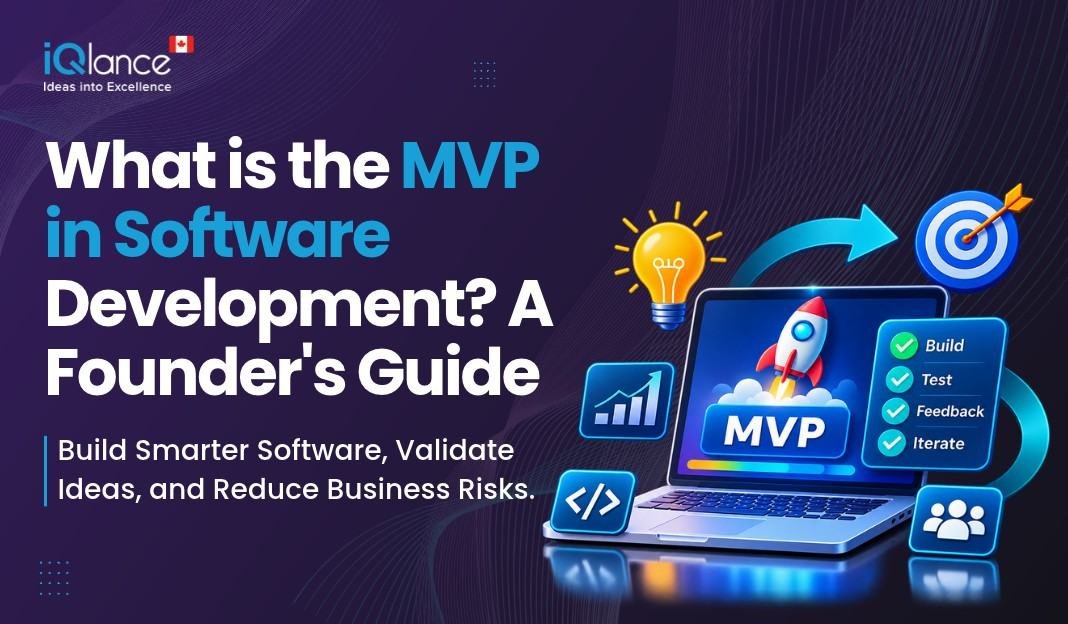
MVP software development helps businesses make their idea a reality. The first step is to understand the needs of customers and establish clear goals. It then passes through feature planning, design, development, and testing. Once the product launches, businesses can gather feedback and make improvements.
Identify the stakeholders and decision makers
First, determine the problem that this product will solve. Identify your target audience and understand their needs. Set clear objectives for your MVP, such as checking market demand, improving business processes, or exploring new revenue opportunities. For startups, software development for startups should begin with a clear understanding of business goals and customer expectations. Define how you will measure success before development begins.
Research the market
Conduct market research to understand the competition and available solutions. Identify opportunities where your product could be used. Discuss with potential customers via interviews or surveys. Discover what they don’t enjoy and what they hope for in their lives. Use this to test your assumptions and determine if your idea is a real solution to a problem.
Prioritize Essential Features
Write down all the characteristics your product should have. Identify key features and distinguish them from features that can be incorporated later. Pay attention to features that address the primary customer problem. Don’t include extra features in the initial one. This helps to focus the project and manage costs of the development.
Design and Develop the MVP
Define the primary journey of the user and make wireframes or UI/UX designs. Choose technologies that suit your requirements and budget. The developers then develop the basic features in a progressive manner. Communication warden helps the founder and the developer solve the problem at an early stage. It also ensures that the project stays on track with business objectives.
Test and Present the Product
Test the MVP for functionality, usability, security, and performance. Address critical issues prior to launch. Initiate with a small group of target users if appropriate. Their feedback can assist you in identifying issues and developing the product prior to reaching more consumers.
Collect feedback and make improvements.
Once it’s launched, track the product usage. Use surveys, interviews, and usage information to gather feedback. Monitor relevant metrics including signups, engagement, and conversions. Compare to original objectives. Apply these results to make enhancements to current features and design future modifications.
The MVP software development process doesn’t stop after the launch. Users keep learning about the business, and the product keeps improving. This is beneficial for founders to make better decisions and invest in features that real customers demand.
What Are the Key Features You Should Have on Your MVP?
The key is for an MVP to address a single major customer challenge. It does not have to include all functionality of the finished product. Rather, it should contain the necessary functions that users require. The right features depend on your business goals and customer needs.
Here are the key features to consider:
- Core Functionality: Include features that solve the customer’s main problem. For instance, a food delivery MVP might require restaurant listings, order, and payment features.
- Simple User Experience: Ensure that the product is easy to navigate. Users should be able to complete meaningful work without confusion.
- Reliable Performance: Ensure the product performs well. Use, test, and resolve issues with the primary features that may impact users.
- Basic Security: Protect user accounts and personal information. Securely log in and utilize proper access controls.
- Essential Integrations: Add only the third-party services needed for core functions. These may include payment gateways or email notifications.
- Analytics & Feedback: See key user interactions and gather feedback. This helps you identify users and areas where the product needs improvement.
Choosing the right features helps control costs and keeps development focused. MVP development for startups should focus on essential features that provide real value. An experienced team can help define the initial scope and plan future improvements.
Remember, an MVP should have fewer features, not lower quality. It must work reliably and provide real value to early users.
What is the Development Time for MVP in Canada?
Understanding software development cost helps businesses set a realistic MVP budget. The final cost is dependent on the complexity of the product, features, and the required technology of the product. Less sophisticated user roles and/or integrations typically come with a lower cost for a simple application.
Here are the estimated development costs for different types of MVPs:
| MVP Type | Estimated Cost (CAD) |
|---|---|
| Basic MVP | $15,000–$40,000 |
| Mid-level MVP | $40,000–$80,000 |
| Advanced MVP | $80,000–$150,000+ |
For a basic MVP, it may be as simple as user signup, user dashboard, and basic workflows. Payment integration, third-party services, or different user roles may be required for a mid-level MVP. The advanced MVP might include complex business logic, AI features, and even several integrations with other systems.
Other factors also affect the final cost. These factors include the UI/UX design, testing, security needs, and the development team’s experience. One should also plan for the costs of hosting, maintenance, and third-party service fees after launching the website.
To keep the cost down, set goals for the business and begin prioritizing what needs to be done during the development process. Ask for an in-depth estimate according to your needs. This ensures that you know where your money is going and won’t have to pay any additional charges.
To reduce risk, it’s better to develop a narrow MVP to test an idea before building new features. The product size can be increased if you learn from the users and the market is validated.
How to Choose the Right MVP Software Development Company
The right MVP software development company can help you develop a product that meets your business goals and budget. Look for a team with experience, skills, and a clear line of communication. When making a decision, take into account:
- Relevant Experience: Find a team with experience in developing software products similar to yours. Knowing the industry experience can help to reduce potential problems in development.
- Portfolio and Quality: Check previous projects and get acquainted with the team’s quality, functionality, and design.
- Technical Expertise: Make sure your product will need technologies and integrations that the team is familiar with.
- Specific Scope and Cost: Ask for a detailed scope of work with features, cost, schedule, milestones, and deliverables.
- Communication: Choose a partner who will regularly update you with communication and who can explain technical things in a simplified way.
- Testing and Support: Ensure that there is quality testing, launch support, and maintenance included.
- Future Growth: If your business is growing, choose a team that will be able to support your product as you grow.
Considering a business MVP development? Contact the iQlance team to discuss your idea and explore the right development approach.
Conclusion
The MVP enables companies to test their ideas, understand customer needs, and control initial costs. The cost of an MVP in Canada can range from CAD $15,000 to more than CAD $150,000, depending on the complexity of the project.
Consider basic elements and select the right development partner. This allows you to create a product that will achieve your goals and help you grow.
At iQlance, we help businesses turn ideas into scalable software products through our custom software development services. Our team can help you plan, develop, and launch an MVP that aligns with your business goals and future growth.
Ready to build your MVP? Contact us today.
Frequently Asked Questions

 Previous Briefing