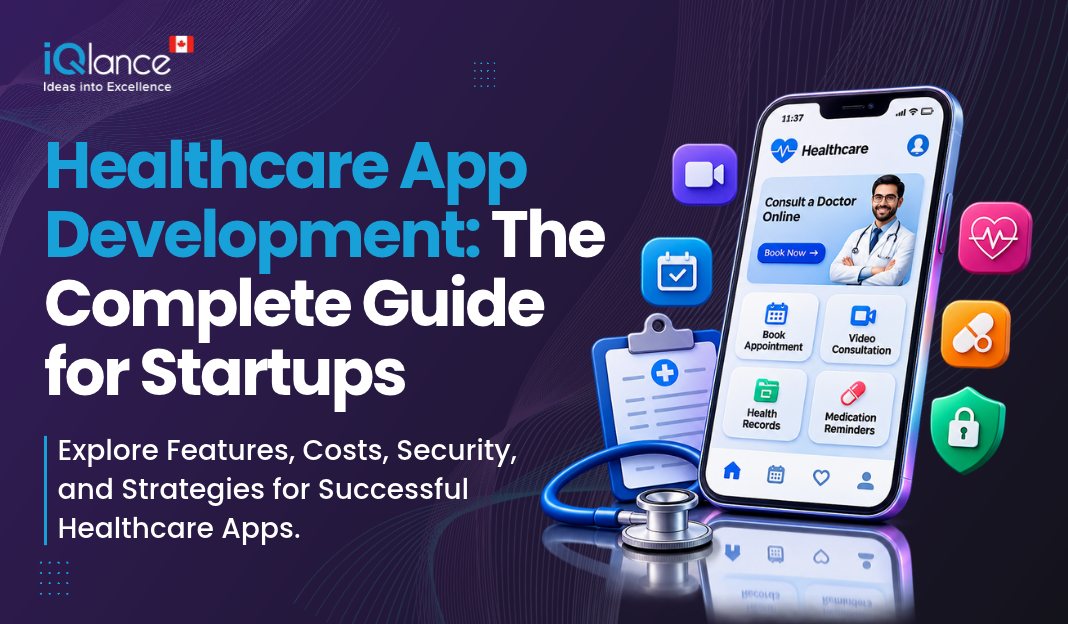
Healthcare App Development: The Complete Guide for Startups
Introduction
The healthcare environment is becoming increasingly digital. Patients want better access to doctors, quicker appointments, and simpler health management. Healthcare providers also need better tools to manage patient records and daily tasks.
In 2024, 92% of healthcare providers reported having access to digital health systems, according to Statistics Canada. This is an example of the increasing importance of technology in healthcare.
Startups can address real problems with healthcare app development. Also, it can enhance the patient experience. But that takes a lot of planning, helpful features, and security.
Learn about types of healthcare apps, what they must have, privacy concerns, development expenses, and how to launch an app in Canada.
What Does a Healthcare App Do?
A healthcare application is an application that can be used to manage healthcare-related tasks via a phone or online. Patients can make an appointment, consult doctors, and monitor their health. Clinics can keep records and contact patients.
Every application has a different function. Some match patients with doctors. Others assist clinics in their daily activities.
The first step in planning healthcare app development in Canada is understanding users. They should additionally establish their business objectives and privacy obligations.
A mobile app development company in Canada can assist you in planning the project. An experienced team can also suggest the appropriate technology.
Types of Healthcare Apps
1. Telemedicine Apps
Telemedicine applications enable patients to see doctors remotely. This could be video calls, booking appointments, and secure messaging.
Patients do not have to go to a clinic for treatment. These apps can also help schedule follow-up appointments.
2. Appointment Booking Apps
Appointment booking apps aid patients in locating health care providers. Users can see the time slots available and schedule online appointments.
The application can remind you of appointments. Patients can also reschedule or cancel their appointments. These features assist clinics in managing their scheduling.
3. Patient Management Apps
Patient Management Apps are used in clinics to run their day-to-day operations. Staff can handle patient information, appointment scheduling, and records.
Some apps also can have billing and communication. Access Control is used to secure sensitive patient information.
4. Apps for Remote Patient Monitoring.
A remote monitoring app gathers health readings from connected devices. Some of those devices could be blood pressure machines and other wearable sensors.
Patients and health professionals can check out health trends. The App can also alert you if readings are due.
The system needs to deal with health data sensitively. It should also include suitable clinical supervision.
5. Medication and Health Tracking Apps
They can monitor medications, symptoms, and activities. They can also give medication reminders.
Such apps are easier to use with clear information. The app needs to provide information on the boundaries of health advice.
Key features of the healthcare app are listed below:
1. Secure Login and User Profiles
Users should have a secure method of access to their accounts. Contact information, appointment information, and health information may be included in the profile.
Apply proper authentication and access controls. Allow each user to access only their own information.
2. Booking and Reminders
Should be able to easily book appointments. They should also be able to view or change their bookings.
Remind them of the appointment automatically. Clinics can work more efficiently with more effective scheduling.
3. Patient Records and Secure Messaging
Patients might require their medical records, test results, and care instructions. They can also use secure messaging to reach authorized health care providers.
The application should manage access to and sharing of information. Permission clearing is an important part of protecting patient privacy.
4. Video Consultations
Video consultations enable patients to communicate with health care providers online. Users should be able to easily join and end calls.
The application should be dependable and have appropriate privacy settings. Test video calls on various devices and network scenarios.
5. Payment Integration
Some healthcare apps require online payments. Users can pay for all appointments and consultations through the app.
Select the right payment provider for your business. Clearly state the payment and refund policies. Provide a safe payment process.
6. Processor Plug-and-play capability
Electronic health record (EHR) and electronic medical record (EMR) integration enables the connection of apps with healthcare systems. These integrations can be used to retrieve information for authorized parties.
Understanding EHR software development can help businesses explore how healthcare software manages and integrates patient information.
Integration: can be worn. Check the integrity, quality, and functionality of each integration.
7. Medication Management and Health Tracking
Reminders help stick to medications. They can keep a record of symptoms and activity.
Keep information clear and comprehensible. Avoid making claims that the app can’t.
8. AI-Powered Features
AI can help automate repetitive tasks. This can also help in supporting appointments and information management.
Developing a healthcare app should consider patient needs, security, and usability. You can start the app with minimal features and add more as they are built.
Data privacy, security, and compliance in Canada
Healthcare apps can store sensitive personal information. It is crucial to safeguard this data. Design for privacy and security up front. Do not remove it until later in development.
Gain knowledge of the applicable Privacy Laws.
There may be various privacy laws for your app. Requirements are based on location, business, and data.
PIPEDA governs some private sector activities and organizations. PHIPA applies to personal health information that organizations in Ontario deal with.
There are also provincial laws in Alberta, British Columbia, and Quebec. Review requirements for all provinces that you plan to operate in.
Protect Sensitive Information
Secure data while in transit and in storage. Implement secure login and access levels.
Test the app regularly for security issues. Ensure software is up to date and that backups are important. Make recovery plans for unexpected incidents.
Take only the information that you need. Describe its use and storage. Adhere to relevant consent, access, retention, and deletion guidelines.
Check if Health Canada Approval is required
Not all health care apps require Health Canada approval. Requirements vary based on the use and functions of the app.
The treatment of a general wellness app can be different from that of medical software. Diagnostic or treatment software can be regulated as medical devices.
Check these requirements prior to launch. If you are providing medical advice with your app, you should consult expert regulatory guidance.
Estimated Healthcare App Development Costs in Canada
The cost of healthcare app development varies according to the project’s size. The budget may be impacted by features, integrations, security, and testing.
A basic app or MVP may cost CAD $ 25,000–$60,000. It could contain patient profiles, schedule appointments, and reminders.
A medium-complexity app may cost CAD $ 60,000–$150,000. It can have secure messaging, payments, video consultations, and an admin dashboard.
An advanced app may cost CAD $ 150,000–$300,000 or more. It may include EHR/EMR integrations, remote monitoring, and advanced AI features.
These figures are estimates. The final budget will depend on the requirements and the development team you select. Understanding the factors that influence app development cost in Canada can help you plan your healthcare app budget more effectively.
So, what factors influence the cost?
Total cost can vary depending on the number and complexity of features. Basic features tend to be less developed. Advanced functions might require extended time and testing.
Budget is also a function of design. More complex workflows may need more planning and user testing.
Third-party integrations can add development costs. Some providers also charge ongoing service fees.
There might be additional security measures and compliance audits required for healthcare apps. Testing and maintenance also have an impact on the overall budget.
Review the main factors affecting your app development budget before requesting a project quote.
How to Build a Healthcare App for Your Startup
Step 1: Identify the Problem
First, identify a problem that your app can solve. Interview prospective users and healthcare workers. Inquire about their needs and challenges.
Analyze existing apps to get an idea of the market. Identify and search for product niche opportunities. Your decisions will be directed by a clear problem statement.
Step 2: Identify Your Target Customers
Determine the users of your app. The audience can be patients, doctors, caregivers or clinic staff. Groups have varying requirements. Identify their main tasks before planning the screens and features.
Step 3: Select Core Features.
Don’t add all features all at once. Start with the functions that are most important to the user.
A telemedicine MVP might include secure login, appointment scheduling, video consultations, and notifications. Additions can be made after initial testing of the first version.
For startups, a targeted launch is typically the ideal route for developing healthcare apps. This way, you can gauge the market before you invest more.
Step 4: Choose the Right Technology
Choose appropriate technologies for features and future plans. Consider budget, security, and target platforms.
You might require a mobile app, web dashboard, backend, and database. All parts should operate safely together.
Ask your developers to explain their choices of technology. Make sure that the solution will be scalable for growth.
Step 5: Design and Test the App
Design wireframes prior to development. These depict the flow of users in the application.
Design and prototype with intended users. Take their suggestions into account to design it better.
Test basic workflows, permissions, and integrations during build. Take special care to secure health information.
Step 6: Launch and Improve
After the agreed requirements, launch the app. Observe & collect user feedback.
Quickly resolve issues and improve areas for future changes. Include maintenance and support in your budget.
You can explore MVP App Development to learn more about building and testing an early product.
Step 7: Choose an Experienced Development Partner
Before you hire a healthcare app development company, you need to understand your project’s requirements. It should also adhere to clear development and testing processes.
Examine its past performance and expertise. Inquire about security, integrations, and support.
You can also contract mobile application developers who are capable of programming the skills that your project needs. Choose a group that can speak and explain what they are doing.
A healthcare mobile application development company should be well-versed in the needs of healthcare users. Discuss the project scope, project milestones, code ownership, and maintenance terms before signing an agreement.
Conclusion
Healthcare apps can enhance access to services. They can also assist providers with everyday duties.
Begin with a clear purpose and valuable functions. Secure patient data and check regulations that may influence data access.
Make a prototype and validate it with real users. Use their feedback to improve the product.
With proper planning, healthcare app development can help you create a valuable product for your startup. It can also help your business to grow. Contact us today.
Frequently Asked Questions