React Native App Development: Benefits, Risks, and Cost
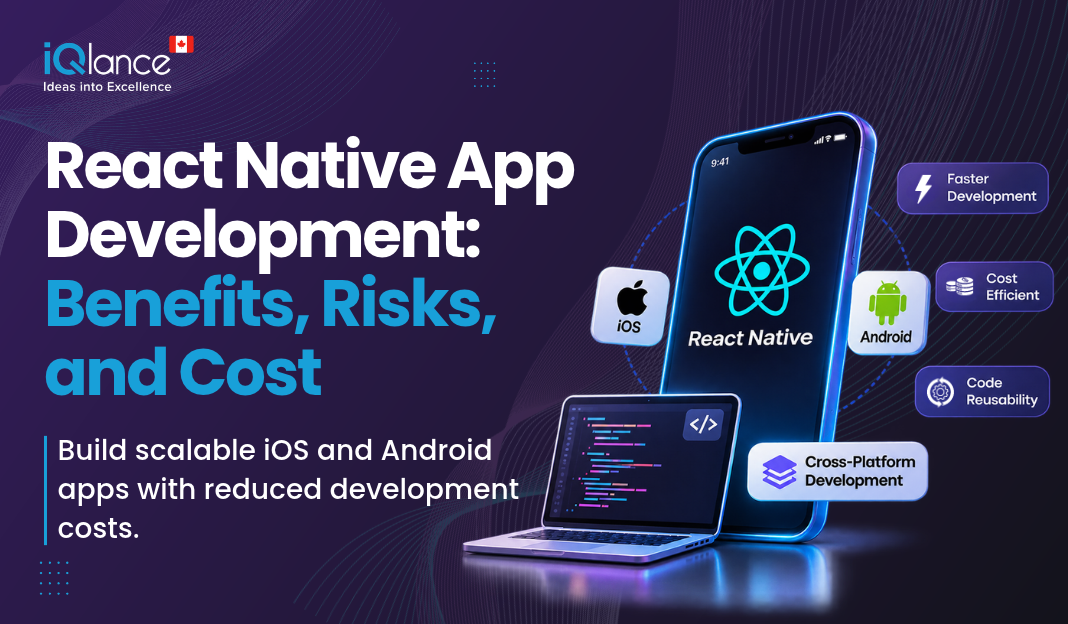
Introduction
Building a mobile app can help your business reach more customers. It can also enhance your services and support business growth. However, creating separate apps for iOS and Android can add time and cost. React Native App Development is an excellent solution. It lets businesses develop apps for both platforms with a common codebase. This reduces redundant tasks and makes maintenance easier.
React Native is a leading trend in mobile development. The 2025 State of React Native survey reported that in 2025, the framework had 4 million downloads per week, a 2X increase from 2024. But it might not be for all projects. Budget, complexity, and performance are key considerations.
In this blog, we will explain how React Native works. We will also discuss its benefits, risks, development process, and estimated costs in Canada. Finally, this blog covers how to choose a development team.
What Is React Native App Development?
React Native is a framework used to develop mobile applications for iOS and Android with JavaScript and React. Rather than developing two independent apps, developers can share a lot of code across platforms. This will save time and reduce duplicate work.
For companies looking to appeal to users on both platforms, React Native App Development is a viable alternative. But there are other things that might need platform-specific code to function properly.
How React Native Works
React Native uses reusable components to build mobile app screens. These components can be used in buttons, forms, navigation, and more. The framework is designed to be able to integrate the app with the native platform features as required.
For instance, a shopping app could publish its product listings, shopping cart, and accounts screens for both iOS and Android. Some native configuration may be required for features like camera access or some functions of the device.
This way, react native mobile app development can be helpful for several business applications. It also enables the developers to have a common codebase and customize certain features for different platforms.
React Native vs. Native App Development
Each app is built with a different approach. Native apps are built with the technologies that are inherent to their platform. Generally, iOS applications are developed in the Swift programming language, and Android applications are developed in the Kotlin programming language. Developers can reuse a lot of code between the two platforms with React Native.
| Feature | React Native | Native Development |
|---|---|---|
| Codebase | Shared codebase for iOS and Android | Separate codebases for each platform |
| Development Time | Reduces repetitive development work | Requires platform-specific development |
| Performance | Suitable for most business apps | Ideal for apps requiring high performance |
| Updates and Maintenance | Shared code makes updates and maintenance easier | Updates, bug fixes, and maintenance are generally handled separately for each platform. |
| Ideal Use Cases | Well suited for e-commerce, booking, delivery, and business applications. | Ideal for applications requiring advanced graphics, intensive processing, or specialized platform-specific features. |
Both of these are excellent! The features, budget, and performance needs of the application will dictate this. Cross-platform app development is a method to develop an app for both iOS and Android operating systems with a single code base.
Key Benefits of React Native App Development
React Native offers several benefits for businesses that want to build mobile apps for iOS and Android. This can help to save development time, avoid duplicated development effort, and simplify application maintenance.
Faster Development and Time-to-Market
It might take longer to create two apps. React Native lets you share the code between the two OSs. This can help teams build and release apps more rapidly.
Reduced Development and Maintenance Costs
Having two codebases can be expensive. React Native enables developers to reuse a lot of code. This helps to lower development efforts and improves ease of updating. However, it depends on the features and complexity of the app.
Code Reusability Across iOS and Android
Developers can use common features such as logins, users, and products. This minimizes rework. Some features may require additional code for each platform.
Consistent User Experience
Consistency of layout and features of an app on iOS and Android with React Native. It also allows developers to customize the design for each platform. This makes the app easier to use.
Perfect for Startups and MVP development.
Many startups prefer to do a test before investing in a complete product. They can develop an app with basic features using React Native first. They can learn from the users and then change the features afterward.
This makes MVP App Development a useful approach for businesses that want to test an idea while managing their budget.
Overall, the benefits of react native app development include faster development, code reuse, and easier maintenance. But it will rely on the proper decision relying on your business goals and requirements for the app.
Risks and Limitations of React Native App Development
While highly useful for several business apps, React Native has its drawbacks. These hurdles can be planned for better if known at an early stage.
Inability to perform complex applications.
React Native can be used to implement many common app functions. But apps with complex animation, heavy graphics, and heavy processing may require additional optimization. Early testing should be done by developers looking out for potential performance issues.
Need for Native Modules
Access to native iOS/Andriod code may be necessary for some features. This might include particular hardware attributes and device integration. This can make the development process slow and require native programming skills.
Third-Party Library Compatibility Issues
There are lots of third-party libraries to add features to the React Native application. Not all libraries are compatible with all updated versions of the frameworks or the two platforms, respectively. Before selecting the library, it is essential for developers to test the library compatibility. Older Libraries may require extra attention as well.
Test and Maintenance Challenges
An application can behave differently on various versions of the operating system or on different devices. Developers must test the app on the appropriate devices and platforms. Regular updates are also crucial for security, compatibility, and performance.
With proper planning, risk can be reduced by making regular tests and choosing the right technology. Also, a more experienced development team can easily resolve technical issues at an early stage and save you money.
React Native App Development Process
Creating a mobile application requires a number of steps, ranging from concept to release. The react native app development process is easily understandable, which makes it easier for businesses to manage time, budget, and project requirements.
Requirement Analysis and Planning
The first step is to grasp your business objectives and target users. The development team determines the features, technical needs, and project schedule. At this stage, the budget and project priorities can be further defined.
UI/UX Design and Prototyping
Then, the designers create the design of the app and how it will operate. They build wireframes and prototypes to demonstrate the screens and the user’s journey. This provides the business with the opportunity to look at the design before it starts to be developed.
App Development and API Integration
Developers start building the app using reusable components. They add features as per project scope, like login, profile, payments, notifications, etc. They also link the app to the back-end, database, and necessary third-party services.
Testing and Quality Assurance
The team also tests the app on various devices and versions of the operating system before launch. They examine the core features, performance, security, and user experience. The team resolves any issues that have been identified before release.
Deployment and Maintenance
Once the testing is done, the team makes the app available for sale on the Apple App Store and Google Play Store. The team adheres to the requirements that each store has set. Once launched, it is maintained and updated for new OS versions, performance enhancements, and bug fixing.
Businesses can navigate these stages better with the assistance of a trustworthy mobile app development company. Good communication and frequent progress reports also help ensure the project runs smoothly.
The price of developing an application with React Native.
Building a mobile app can cost a lot of money, depending on the app’s features, design, and complexity. More advanced features typically need more investment time and resources.
Estimated Development Cost
Below are the approximate costs of App Development in Canada. All prices are in Canadian dollars (CAD).
| App Type | Estimated Cost (CAD) |
|---|---|
| Basic App or MVP | C$15,000–C$40,000 |
| Standard Business App | C$40,000–C$80,000 |
| Advanced App | C$80,000–C$150,000+ |
| Enterprise App | C$150,000–C$300,000+ |
These are approximate figures. Actual costs depend on project requirements and development rates.
Factors Affecting Development Cost
Key factors include:
- Features: Complex features take longer to develop.
- Design: Custom designs cost more.
- Integrations: Payment Gateways and APIs increase work.
- Testing: Apps should be tested on a variety of devices.
- Maintenance: Updates and bug fixes require ongoing support.
Ways to Reduce Development Cost
Include the basic features and expand them as your business expands. Identify the needs of the project clearly and review development proposals. Confirm everything it involves, including testing, deployment, and support.
React Native app development cost depends on your app’s features and complexity.
When to use React Native for your App?
If businesses want to develop apps for both Android and iOS, they can choose React Native. It is ideal for e-commerce, booking, delivery, and business management applications. It can also be used by startups to try the concept out before committing to a larger product.
For more complex apps that need sophisticated graphics, heavy processing or special features of the device, however, native development can be better.
When deciding on React Native App Development, think about your budget, features, and long-term goals. Choose the option that provides a smooth user experience and fits your business needs.
How to Hire React Native App Developers
Choosing the right developers is important for your project’s success. Here are three things to consider.
Evaluate Technical Expertise and Experience
Find developers who have experience with React Native, API integration, and mobile app testing. They should be aware of both iOS and Android needs.
Check on Portfolio and Past Projects
Check their previous apps and client reviews. Look for projects similar to yours in features and complexity.
Analyze pricing, communication, and support.
Compare quotes, project schedules, and communication methods. Also, see if the team provides maintenance and support following launch.
However, consider the React Native app developer’s technical expertise, communication skills, and ability to offer ongoing support, not just cost.
Conclusion
React Native App Development can enable companies to create applications for both Android and iOS with less duplicate effort. It offers benefits such as code reuse, faster development, and easier maintenance. However, every project has different needs, so consider performance, features, and budget before choosing a technology.
At iQlance Canada, we can guide businesses to the mobile application options that best align with their objectives. Contact us to discuss your project and find the right approach.
Frequently Asked Questions

 Previous Briefing