

You need a developer. Your budget is real, your deadline is real, and the wrong hire will cost you more than money. This guide breaks down both hiring models, i.e., dedicated developers vs. freelancers, so you can make the right call for your project.
Whether you are building a SaaS platform, a customer-facing mobile app, or a core internal system, one question comes up early: should we hire dedicated developers or go with freelancers?
Both options work. The right one depends on your project’s size, timeline, and how much risk you are comfortable carrying. Let’s break it down clearly.
Quick comparison: Dedicated Developers vs Freelancers
| Factor | Dedicated Developers | Freelancers |
|---|---|---|
| Availability | Full-time, your project only | Working with multiple clients |
| Scalability | High: add developers, QA, DevOps easily | Limited |
| Security & IP | Strong NDAs, structured access control | Varies by individual |
| Communication | Structured standups, sprints, reporting | Depends on the person |
| Long-term projects | Excellent fit | Moderate: risk of drop-off |
| Team collaboration | Strong, integrated workflow | Limited, usually works solo |
| Project ownership | High | Medium |
| Upfront cost | Higher | Lower |
| Risk level | Lower | Higher |
| Best for | Growth-stage and enterprise projects | Short tasks, MVPs, one-off fixes |
Understanding the Dedicated Developer Model
What Is a Dedicated Developer?
A dedicated developer is a skilled professional or team who works exclusively on your project for the duration of an engagement. They’re not splitting attention between five other clients. They’re ingrained in your workflows, aligned with your goals, and operate like an extension of your internal team.
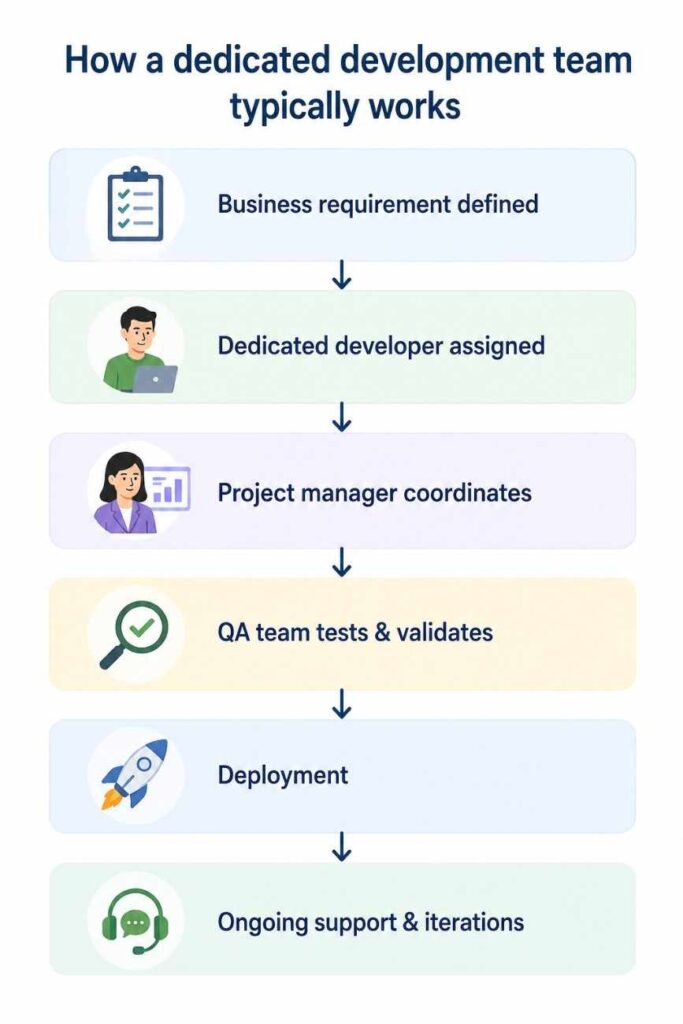
Dedicated developers are typically sourced through a mobile app development company or a software development firm. That backing matters: it means you get project management, QA, and ongoing support built in, not bolted on.
Key Characteristics:
- Works exclusively on your project
- Integrates into your existing tools and workflows
- Long-term engagement, usually 6 months or more
- Backed by a development company’s support structure
- Acts as an extension of your internal engineering team
Understanding the Freelancer Model
What Is a Freelancer?
A freelancer is an independent professional who takes on contract-based work. They’re typically hired on a per-project or per-hour basis, and they usually manage several clients simultaneously. Freelancers range from solo generalists to highly specialized experts in niche technologies.
The key difference is that a freelancer’s time and attention are not exclusive to your project.
Common Freelancer Engagement Models
| Model | How it works | Best for |
|---|---|---|
| Hourly | Pay per hour worked | Undefined scope, ongoing tweaks |
| Fixed cost | One-time fee for a defined deliverable | Small, well-scoped projects |
| Retainer | Monthly engagement for recurring work | Ongoing but limited support |
| Milestone-based | Payment released after defined deliverables | Phased development work |
Detailed Comparison: 7 Factors That Matter Most
(1) Cost
Freelancer rates vary significantly. In 2026, freelance developer rates in Canada range from $80 to $150/hr for general software engineers. AI/ML specialists command $180 to $300/hr. Dedicated development teams from a mobile app development company have a higher upfront engagement cost, but that number includes project management, QA, and support infrastructure costs freelancers don’t include in their quoted rate.
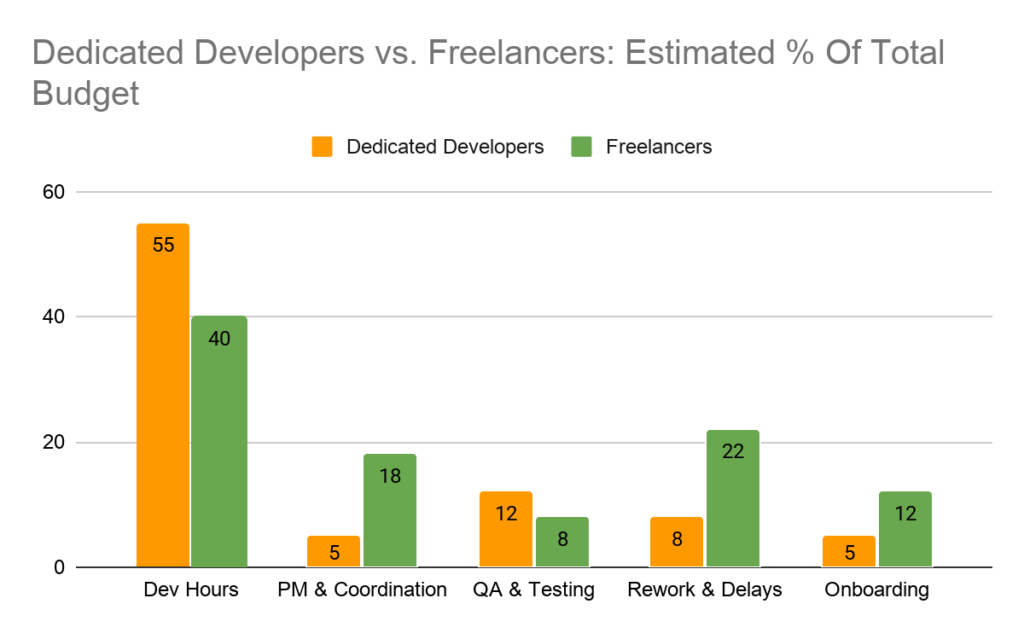
Hidden costs with freelancers are often ignored: hiring search time, coordination overhead, rework when freelancers leave mid-project, knowledge transfer when you hire the next one, and inconsistent code standards that create technical debt.
(2) Availability and Commitment
| Criteria | Dedicated Developers | Freelancers |
|---|---|---|
| Full-time focus on your project | Yes | Usually no |
| Working with multiple clients simultaneously | No | Yes |
| Consistent response time | Yes | Varies |
| Sprint participation | Yes | Sometimes |
| Available if scope expands | Yes | Not guaranteed |
(3) Quality and Consistency
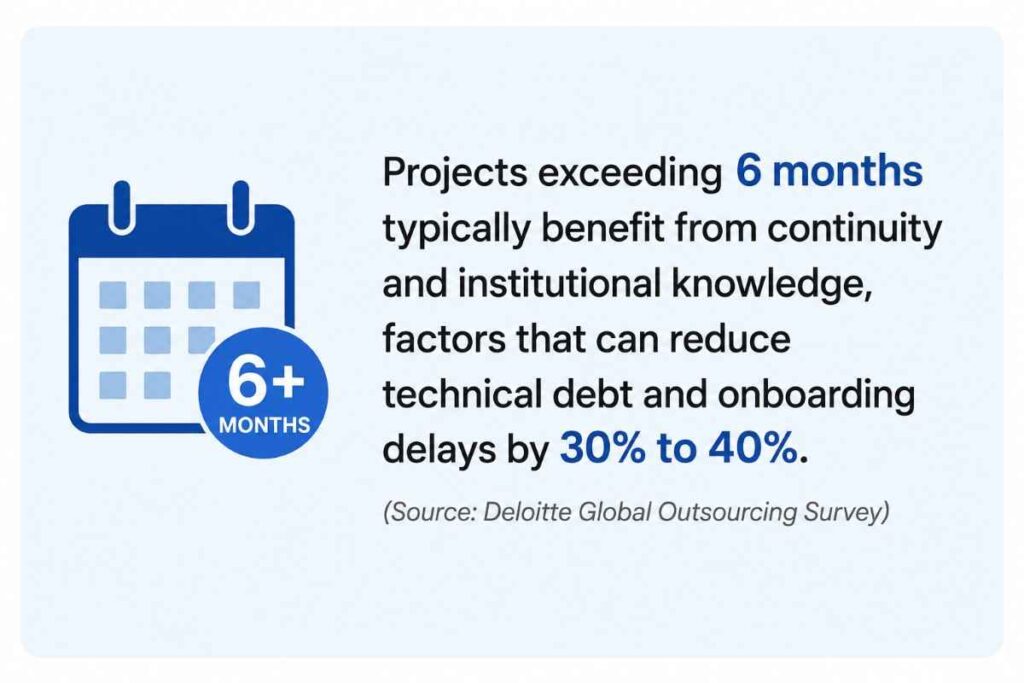
Quality in software development is not just about writing clean code on day one. It’s about maintaining standards. Dedicated developers working through a structured company follow shared coding standards, documentation practices, and code review processes. When a dedicated team member leaves, the next person onboards to existing documentation, not a blank slate.
With freelancers, quality depends entirely on who you hired. Some are excellent. Many operate without documentation habits or peer review. When they exit the project, institutional knowledge exists with them.
(4) Communication and Collaboration
| Area | Dedicated Developers | Freelancers |
|---|---|---|
| Daily standups | ✅ | Optional |
| Slack/Teams integration | ✅ | Depends |
| Jira/project tracking | ✅ | Depends |
| Team meetings & planning | ✅ | Limited |
| Structured reporting | ✅ Regular | Varies |
| Escalation channel if issues arise | ✅ Company-backed | Individual only |
(5) Scalability
Picture this: your app launches with 10,000 users. Three months later, you have 100,000; can your development resources keep pace?
| What you need to scale | Dedicated Team | Freelancers |
|---|---|---|
| Add more developers | ✅ Easy | ❌ Difficult |
| Add QA resources | ✅ Easy | ❌ Difficult |
| Add DevOps support | ✅ Easy | ❌ Difficult |
| Add project management | ✅ Easy | ❌ You manage it |
| Maintain velocity during scale | ✅ Easy | ❌ Usually no |
This is where the model difference becomes most visible. When you need to move fast, a dedicated team backed by a mobile app development company lets you scale without starting your hiring process from scratch.
(6) Security and IP Protection
This matters especially for Canadian enterprises, where PIPEDA compliance and data control are real concerns. Dedicated development companies have formal NDA processes, structured access management, and clear IP ownership clauses built into contracts. Data doesn’t leave through informal channels.
With freelancers, the responsibility falls on you. A freelancer working on three other projects may not have the same data hygiene practices, and enforcing an NDA with an individual across borders is genuinely difficult.
(7) Accountability and reliability
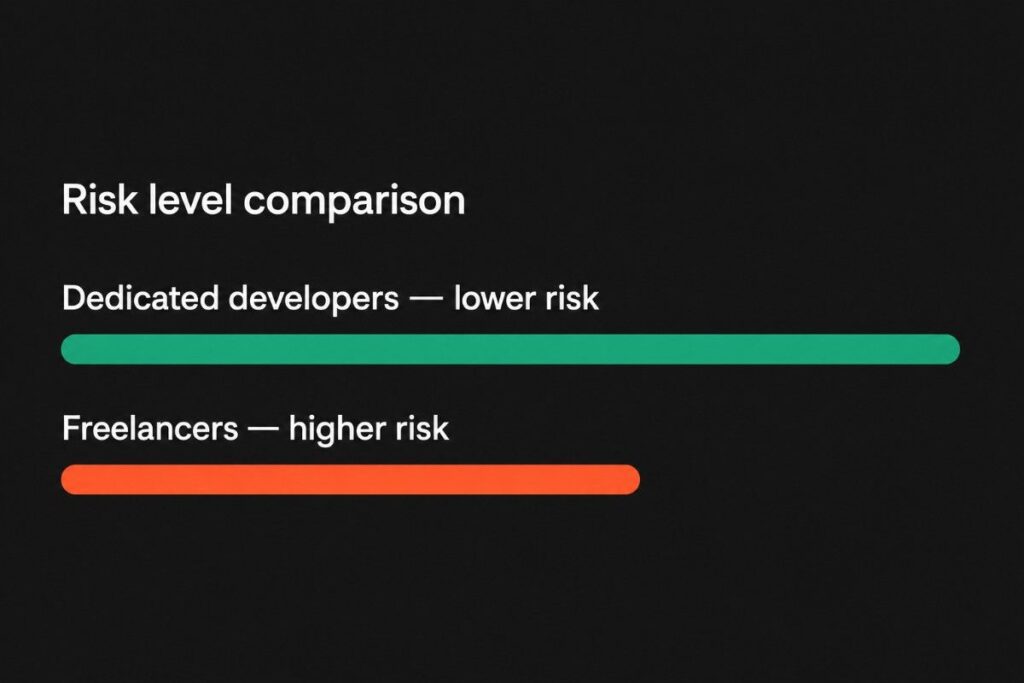
A dedicated development company has contractual obligations, replacement clauses, increasing channels, and a reputation to protect. If a developer leaves, they handle replacement; your project keeps moving. With a freelancer, if they disappear on week six of a twelve-week project, you’re starting a new search while your deadline doesn’t move.
Pros & Cons of Hiring Dedicated Developers
| Pros | Cons |
|---|---|
| Long-term commitment to your project | Higher upfront investment |
| Better team collaboration | Longer initial onboarding |
| High scalability as you grow | Better suited for ongoing, not one-off projects |
| Strong accountability and support | |
| Enhanced IP and data security | |
| Faster project continuity | |
| Structured communication |
Pros & Cons of Hiring Freelancers
| Pros | Cons |
|---|---|
| Lower cost | Availability is never guaranteed |
| Fast to hire | Limited scalability |
| Flexible, short-term contracts | Knowledge loss when they leave |
| Variable quality standards | |
| Communication challenges | |
| IP and security risk |
But Which Model Fits For Your Situation?
| Your Situation | Recommended Model |
|---|---|
| Quick website fix or bug patch | Freelancers |
| One-time design or content task | Freelancers |
| MVP validation with narrow scope | Freelancers or small dedicated team |
| SaaS platform development | Dedicated developers |
| Enterprise software/app build | Dedicated developers |
| React Native mobile app (including post-launch support) | Hire React Native app developers (dedicated team) |
| Flutter cross-platform mobile app (including post-launch support) | Hire Flutter app developers (dedicated team) |
| AI/ML app/model development | Dedicated developers |
| Scaling an existing app/software | Dedicated developers |
| Long-term support and feature releases | Dedicated developers |
The Actual Cost of Hiring
Most companies compare freelancer hourly rates against agency engagement costs and assume freelancers are cheaper. The actual math is more complicated.
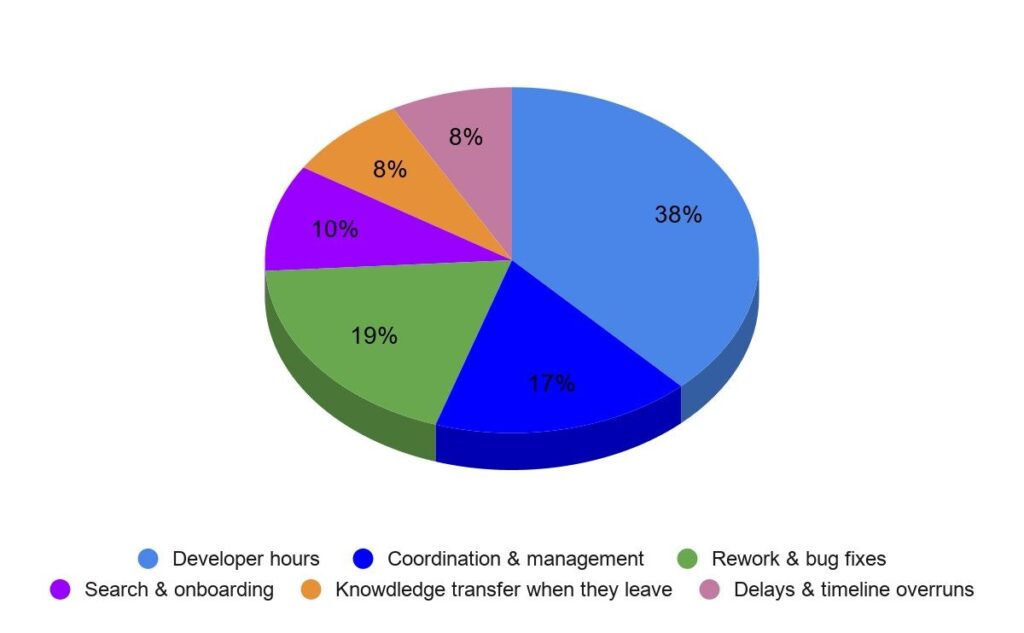
The following is the decision-making checklist that you can follow:
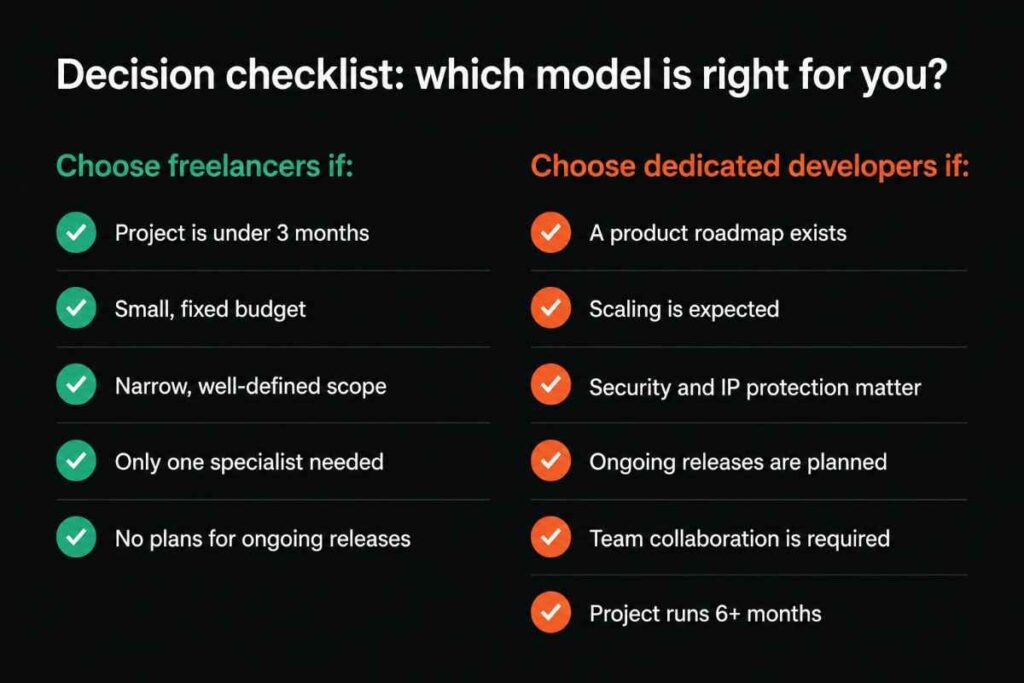
In simple terms, freelancers help you complete tasks. Dedicated developers help you build and grow products.
Why More Canadian Businesses Are Choosing Dedicated Development Teams
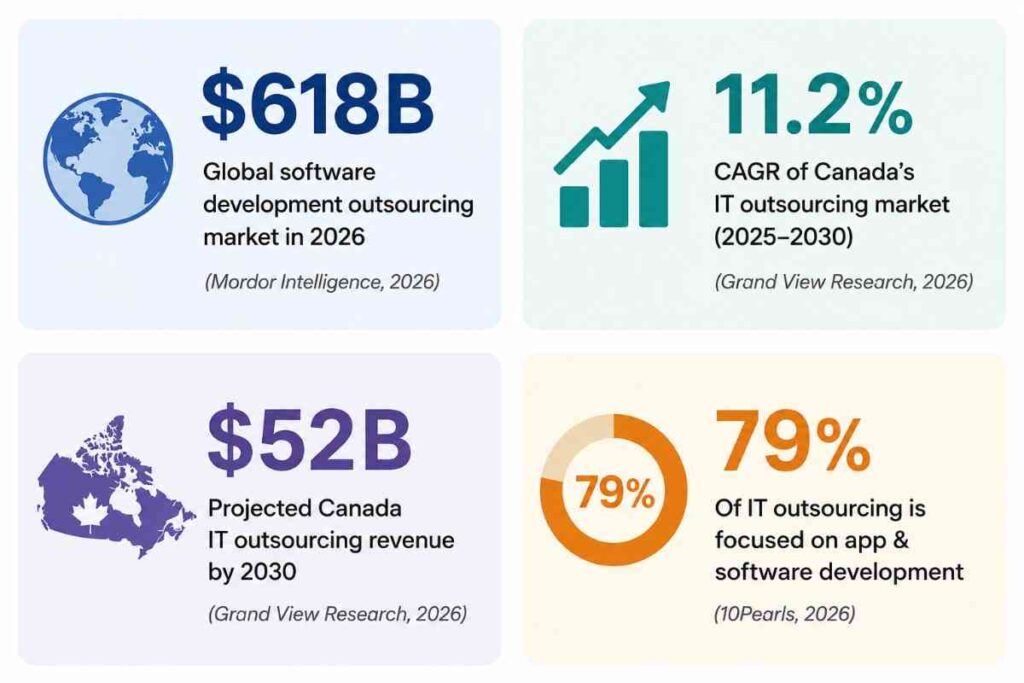
Canadian businesses are investing more heavily in digital transformation than ever before. Whether it’s AI-powered applications, customer-facing mobile platforms, SaaS products, or enterprise modernization initiatives, software has become a long-term business asset rather than a one-time project.
That shift changes hiring priorities.
When software becomes central to business growth, decision-makers need development resources that can provide continuity, scalability, and accountability. A dedicated team offers all three.
Instead of repeatedly sourcing individual freelancers for different phases of a project, businesses gain access to a stable team that understands the product, retains institutional knowledge, and can adapt as requirements change.
This is particularly important for organizations building:
- SaaS products
- Enterprise software
- Customer-facing mobile applications
- AI-powered platforms
- Digital transformation initiatives
- Multi-year software roadmaps
As products become more complex, continuity often becomes more valuable than short-term cost savings.
How to Successfully Hire Dedicated Developers
Not all dedicated development teams deliver the same experience. Before making a hiring decision, evaluate providers against the factors that have the greatest impact on project success.
(1) Technical Expertise
Review their experience with the technologies your project requires. If you’re planning a mobile application, assess whether the team has proven experience building and maintaining similar products.
For example:
- Businesses building native-like cross-platform apps often hire React Native app developers for performance-focused mobile experiences.
- Organizations seeking faster development cycles across Android and iOS frequently hire Flutter app developers for efficient cross-platform delivery.
(2) Industry Experience
Developers who understand your industry require less ramp-up time and can often identify challenges before they become problems.
Ask for examples of projects completed in:
- Healthcare
- FinTech
- Retail
- Logistics
- Real Estate
- Manufacturing
- SaaS
(3) Communication Processes
Strong communication reduces delays and keeps projects moving.
Look for:
- Regular standups
- Sprint planning sessions
- Transparent reporting
- Defined escalation channels
- Shared collaboration tools
(4) Security Practices
Ensure the provider follows structured security processes, including:
- NDAs
- Role-based access controls
- Secure code repositories
- IP ownership agreements
- Compliance-ready development practices
- Scalability
Business requirements change. Your development partner should be capable of scaling resources up or down without disrupting delivery timelines.
(5) Client References and Portfolio
A strong portfolio provides evidence. Client references provide confidence.
Review both before making a final decision.
Looking for Dedicated Developers for Your Next Project?
Choosing between freelancers and dedicated developers ultimately comes down to your business goals.
If you’re building a long-term digital product, scaling an existing application, or planning a new mobile platform, working with a dedicated team can provide the consistency and technical depth required to support growth.
We help businesses extend their internal capabilities with experienced, dedicated developers; mobile engineers; designers; QA specialists; and DevOps professionals. Whether you need to hire dedicated developers for a full-scale software initiative or expand your existing team with specialized expertise, our flexible engagement models allow you to scale according to your business requirements.
From custom software and enterprise applications to React Native and Flutter development, our teams work as a seamless extension of your organization while maintaining complete transparency throughout the development lifecycle.
Conclusion
There is no universal winner in the dedicated developers vs. freelancers debate.
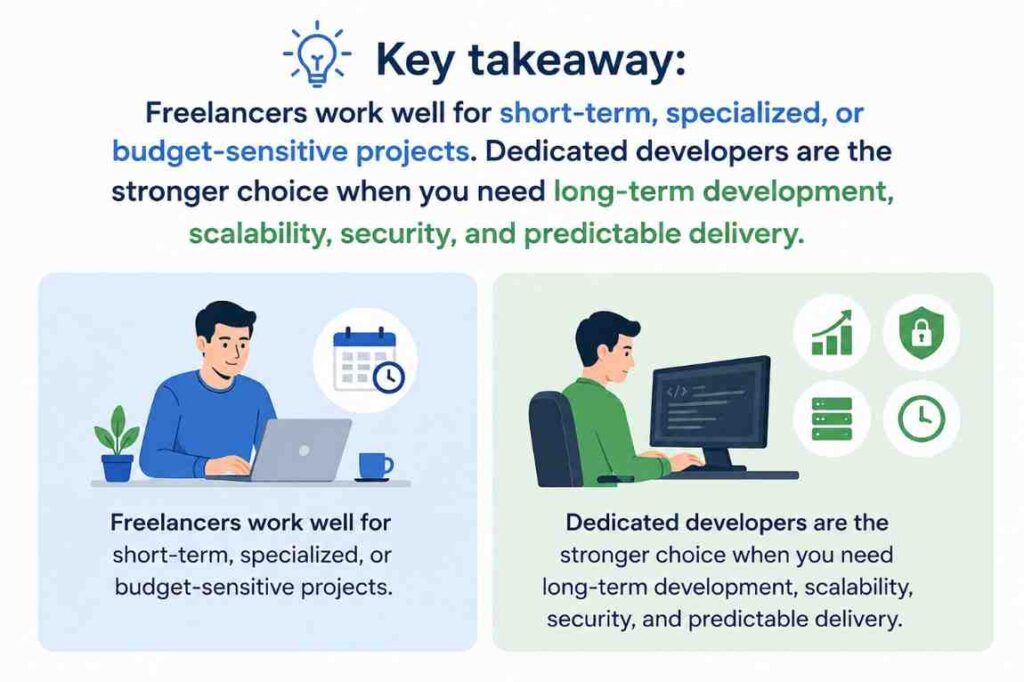
Freelancers remain an excellent option for short-term projects, specialized assignments, and businesses with limited development needs. Dedicated developers, however, often provide greater long-term value when projects require collaboration, continuity, scalability, and accountability.
Before making a hiring decision, evaluate the scope of your project, your growth plans, security requirements, and the level of involvement you expect from your development resources.
The right choice isn’t the one with the lowest hourly rate. It’s the one that gives your business the best chance of delivering a successful product today while supporting growth tomorrow.