Why Hire App Developers in Toronto for Your Business?

Mobile apps were a nice-to-have once, but recently, they’ve become a must-have business asset. Every niche, including retail, healthcare, logistics, and financial companies across Canada, is shifting towards mobile technology that improves customer engagement, streamlines operations, and gives them opportunities to create fresh revenue channels.

This might seem extreme, but as per the studies, 31 million smartphone users are spending more than 4.5 hours daily on mobile apps. But these numbers alone are saying one should not neglect the mobile app. However, the CEOs of the Canadian companies are questioning how to strategically develop an app and how to find the right app development Toronto partner. 

The Canadian mobile app market is generating over $3 billion in annual revenue every year as businesses are rapidly adopting digital solutions. These trends are pushing businesses, regardless of size, to explore app development for small business and enterprise solutions that deliver convenience and accessibility to their customers.

However, building a successful app requires the right expertise. This is why many organizations prefer working with experienced app developers Toronto businesses trust, ensuring their mobile solutions are scalable, secure, and aligned with market expectations.

12 Reasons To Hire App Developers Toronto

1.Access to Highly Skilled Developers 

Canada is one of the best places for the world’s most talented software engineers and mobile developers. The country is offering training to thousands of tech graduates every year from well-known universities and technical industries. The professionals working in Canadian development companies are highly trained in cutting-edge technologies, including: 

This technical expertise ensures that businesses receive high-quality native apps that are scalable, reliable, and future-ready.

2.Strong Technology Ecosystem 

Canada has a powerful technology ecosystem supported by government initiatives, innovation hubs, and venture capital investments. Cities like Toronto, Vancouver, and Montreal have rapidly grown into major global technology centers. This ecosystem encourages innovation, collaboration, and continuous improvement. As a result, the professionals in Toronto stay updated with emerging technologies and development frameworks, helping businesses build cutting-edge apps that meet growing user expectations. 

3.High Development Standards and Quality Assurance 

App quality is one of the biggest advantages of hiring Canadian developers. Most app development companies in Canada follow structured development methodologies such as Agile, Scrum, or DevOps. These processes ensure that: 

  • Projects remain transparent 
  • Development cycles are efficient 
  • Regular testing improves quality 
  • Bugs are minimized before launch 

This commitment to quality significantly reduces project risks and helps businesses deliver reliable mobile applications to their users. 

4.Expertise Across Multiple Industries 

Another major advantage of working with the Canadian developers is their experience across diverse industries. Canadian companies have worked with businesses in sectors such as logistics, ride-sharing, taxi booking, healthcare, education, health and fitness, real estate, and more.

Because of this cross-industry experience, developers can quickly understand business needs and build customized solutions that address real operational challenges. 

5.Cost-Effective Development Without Compromising Quality

While Canada offers top-tier development talent, the overall cost of hiring app developers Toronto is often more reasonable compared to developers in certain high-cost tech hubs. Businesses benefit from: 

  • Transparent pricing models 
  • Efficient development processes 
  • Reduced project delays 
  • High-quality output 

6.Strong Focus on Innovation

Canadian technology companies are known for adopting innovation. Many companies actively experiment with emerging technologies to build advanced digital solutions. These innovations include AI-powered apps, ML integrations, blockchain-based applications, augmented reality experiences, and IoT-connected systems. This approach helps businesses stay ahead of competitors and build apps that deliver unique user experiences.  

7.Reliable Communication and Collaboration

Communication plays a critical role in the success of any development project. Canadian development teams are known for their professional communication style and transparent collaboration.

Businesses working with app development Toronto teams often experience the following:

  • Clear project documentation
  • Regular progress updates
  • Structured development sprints
  • Collaborative feedback sessions

This communication culture ensures that projects remain aligned with business goals from the initial concept to the final launch.

8.Strong Data Security and Compliance

Security has become one of the most critical concerns for modern businesses, especially when mobile applications handle sensitive customer data.

Canada has strong data protection laws and regulatory frameworks that encourage companies to follow strict security practices. Most app development companies implement advanced security measures, such as data encryption, secure authentication systems, privacy-focused architecture, and compliance with international standards. 

For businesses handling customer data, financial information, or healthcare records, this security focus provides an additional layer of trust.

9.Experience with Global Clients

Canadian app development firms frequently work with international businesses across North America, Europe, and Asia. This global exposure gives professionals a strong understanding of international markets and diverse customer expectations.

Because of this experience, developers can:

  • Design apps for global audiences
  • Build a scalable architecture
  • Integrate multilingual features
  • Ensure global performance optimization

This makes Canada an ideal destination for businesses planning to expand their digital products worldwide.

10.Agile Development for Faster Time-to-Market

Speed is a critical factor in today’s competitive digital environment. Businesses cannot afford long development cycles when launching new applications.

Most app development companies in Canada use agile development methodologies that break projects into smaller, manageable iterations.

Benefits of agile development include:

  • Faster feature releases
  • Continuous improvements
  • Early detection of issues
  • Flexibility to adapt to new requirements

This approach helps businesses launch applications faster while continuously improving performance and features.

11.Long-Term Support and Maintenance

Launching a mobile application is only the first step. Continuous updates, bug fixes, and performance improvements are essential to maintain user satisfaction.

Reliable app development companies in Canada provide long-term support services, including app updates, security patches, performance optimization, feature enhancements, and compatibility updates for new devices

This ongoing support ensures that applications remain functional, secure, and competitive in the growing mobile ecosystem.

12.Perfect Partner for Small Businesses and Startups

Startups and small businesses often face unique challenges such as limited budgets, evolving ideas, and rapid market changes.

Canadian app development for small business services is specifically designed to help growing companies launch efficient applications without high costs.

Experienced app developers Toronto can help startups by refining app ideas, creating MVPs (Minimum Viable Products), providing scalable architecture, and offering flexible development models. This approach allows small businesses to test their ideas in the market quickly while keeping development budgets under control.

Why Local Expertise Matters for Canadian Businesses

Working with local developers offers various strategic advantages for businesses in Canada.

First, local developers understand the country’s regulatory environment, including privacy laws and data protection standards. This ensures that applications remain compliant with relevant regulations.

Second, local collaboration allows businesses to build stronger relationships with their development teams. Face-to-face meetings, workshops, and strategy sessions become easier when teams operate within the same region.

Finally, local developers provide more reliable long-term support. As businesses grow and expand, they need partners who can continuously improve and scale their applications.

Why Businesses Choose iQlance Solutions for App Development in Toronto

When businesses look for reliable app development companies, they want a partner that understands both technology and business strategy. This is where iQlance Solutions stands out. With years of experience in mobile app development, iQlance Solutions has helped startups, small businesses, and enterprises transform their ideas into powerful digital products.

1.Local Presence in Canada

Having a strong presence in Canada allows iQlance to work closely with clients and understand their specific business needs. This local accessibility helps build trust and ensures smoother collaboration throughout the project lifecycle.

2.Experienced Mobile App Developers

The company’s development team includes skilled professionals who specialize in iOS, Android, and cross-platform app development. Their expertise ensures that businesses receive high-quality applications tailored to their goals.

3.Custom Development Approach

Every business is unique, and so are its digital requirements. Instead of offering one-size-fits-all solutions, iQlance focuses on building custom applications designed to address specific business challenges.

4.Agile and Transparent Development

iQlance follows an Agile development methodology, allowing clients to stay involved throughout the development process. Regular updates and clear communication help ensure that projects progress smoothly and meet expectations.

Conclusion

Mobile technology continues to reshape how businesses operate and interact with their customers. Companies that invest in well-designed mobile applications can improve customer engagement, enhance operational efficiency, and get new revenue opportunities.

However, building a successful app requires expertise, strategic planning, and a reliable development partner. By hiring experienced app developers Toronto businesses trust, organizations can ensure their applications are secure, scalable, and aligned with market expectations.

If you are planning to develop a mobile application for your business, working with a trusted partner like iQlance Solutions can help transform your vision into a powerful digital product.

Frequently Asked Questions

The cost of mobile app development in Toronto depends on several factors, including the app’s complexity, features, design requirements, and development platform. Simple applications may cost less, while complex enterprise solutions require a larger investment.

Development timelines vary depending on the project scope. A basic app may take a few months, while feature-rich applications can take six months or longer to develop.

Yes. Many development companies offer scalable solutions designed specifically for small businesses. These solutions allow companies to start with essential features and expand the application over time.

Most professional development companies offer ongoing maintenance and support services. These services include bug fixes, updates, performance optimization, and feature improvements.

To choose the right developers, businesses should evaluate the company’s portfolio, technical expertise, client reviews, communication practices, and post-launch support services. Working with an experienced and transparent team ensures a smoother development process.

MVP App Development in Toronto: A Comprehensive Guide for Startups

Let me guess! You are planning to build apps like Facebook, TikTok, Tinder, Uber, Spotify, and more, right? And you are planning to hire a mobile app development partner in Toronto for the same. But wait, have you checked their history? I agree, they have multifunctional apps with intuitive features and app designs to give an engaging user experience. However, it was not always the scenario; they started with developing an MVP or a minimum viable product.

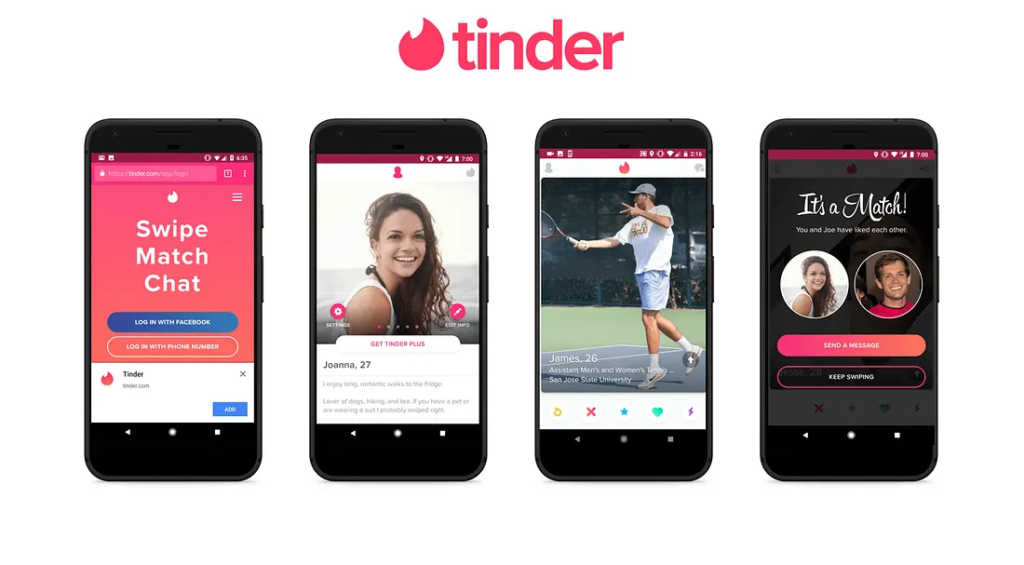
Let’s take an example of Gen Z and millennials’ favorite app, Tinder. The ‘Match Group’ first introduced Tinder as an MVP in 2012. Initially, there were no swipe functions; instead, they gave ‘♥️’ for like and ‘❌’ for dislike. They also introduced gamified success with the “It’s a Match” screen, especially designed to trigger a winning feeling! Early profiles focused heavily on photos, name, and age, reducing the “job application” feel of traditional dating sites compared to the fully functional platform we use today.

Through MVP app development, Tinder has gradually grown over time and extended its reach by introducing more features and adding more functionalities. They have made $1.94 billion in revenue in 2024, a 1.1% increase on the year prior. It had 60 million monthly active users and 9.6 million subscribers in 2024. And in 2026, the app had 75 million monthly active users (MAU) globally.

These data clearly say that building a minimum viable product (MVP) is a way to test the success of a business idea at a minimal cost. This incremental approach of starting from minimal features and scaling over time helps you minimize an initial investment as well as allow for flexible adaptation to users. 

In this blog, we will discuss MVP development for startups, its benefits, how to develop it, cost, and many more things that will help you to know this approach inside out.

What is an MVP in a startup?

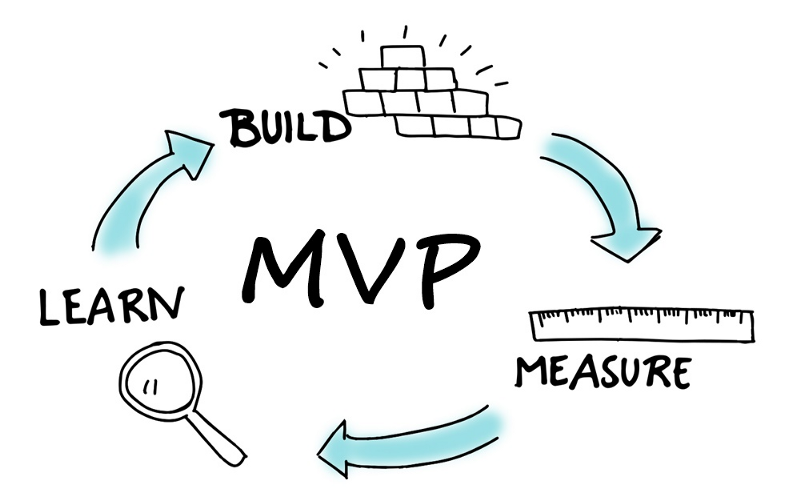
In simple words, MVP is the most basic version of a product with just enough features to be usable by early users and to validate the business idea. The following image shows what an MVP actually is for startups. 

Now the question is, why should startups follow the MVP approach? MVP enables you to test your assumptions, understand your audience’s actual needs, and make data-driven improvements, all without committing substantial time or resources upfront. This approach helps reduce risk and ensures that the product you are building is agile with market demand.

Why Do Startups Choose MVP Development the Most?

The following are some important reasons why startups, SMBs, and even enterprises must invest in MVPs and consult the best app development company Toronto. 

1. Market Validation 

Startups often operate with uncertainty about user needs and preferences. MVP helps allow them to test their core idea with actual users and validate market demand before developing a fully functional app. It ensures that the product aligns with what users actually want. 

2. Risk Mitigation 

Launching a fully functional app without testing can lead to significant financial losses if it fails to resonate with the targeted audience. The MVP development approach minimizes these risks by focusing on important features and gathering feedback early on, helping with adjustments before investments are made. 

3. Efficient Resource Allocation 

Startups can avoid wasting time and money on unnecessary features by developing an MVP. The MVP approach ensures that resources are directed toward what truly matters to the target audience, optimizing development processes and reducing waste. 

4. Competitive Advantage 

Custom MVP development services allow startups to enter the market quickly, potentially outpacing competitors with similar ideas. The early-mover advantage can be important for establishing market presence and brand recognition. 

5. Investor Attraction 

A functional MVP demonstrates progress and viability, making it easier for startups to secure funding and gain investor trust. Investors are more likely to support projects that show tangible results and a clear growth path.

How to Build an MVP?

The following is the process that the leading mobile app development company Canada follows to build a successful MVP. 

1. Conduct Market Research 

The first step of any mobile app development is conducting thorough market research. It will help you understand the growing needs of your target market and what they are looking for in a product or service. Many platforms conduct paid surveys and can help target the right respondents for your MVP in business. 

2. Identify Your Target Market 

After completing market research, the next step is to identify your target market and user persona. It includes identifying the demographics of your targeted niche by answering a few questions, like 

  • Who will be our target user? 
  • What do they actually need? 
  • Why would they use our app?
  • What benefits will they get by using our app? And more. 

After figuring out all the answers, you can easily determine who will use your MVP and what they are expecting from the particular app. 

3. Outline Key MVP Features 

Now you have a complete idea of your target market and their needs, right? So, the next step is to outline the key features of your app. It includes identifying the core functionalities of your MVP solution and services. “Less is more” is what you need to always remember while choosing the MVP approach. Hence, you should focus only on the important features that address the needs of your targeted niche. 

4. Build and Launch MVP 

The feature list is ready! Now you can go ahead and build and launch an MVP. You can partner with the leading app development company in Toronto, like iQlance Solutions, to build a user-friendly product and make it available to the target market. This step also involves promoting your minimum viable product and getting user feedback for adding value to your app. The feedback you will receive will be invaluable, as it will help determine what features to add or remove and how to improve your app. 

5. Analyze the Feedback 

After launching an MVP, it’s time to analyze users’ feedback and figure out what is working and what is not. Remember, a minimum viable product will have flaws and areas of improvement. However, the feedback and data you receive will help refine your app and eventually develop a fully functional version for the end users.

How Much Does It Cost To Build an MVP in Canada

1. Cost Breakdown by the Complexity of MVP

Type of MVPApproximate cost (in CAD) Tentative Time Taken Inclusion 
Simple/Basic MVP$5,000 to $50,0003 to 5 months Core features, simple UI, limited, and no third-party integrations.
Mid-Level/Standard MVP$15,000 to $100,0004 to 9 months Multiple workflows, dashboards, and moderate integrations.
Advanced/Enterprise MVP$50,000 to $300,000 or more8 to 12 months or more High security, AI, or complex, real-time features.

2. Cost by Team Structure

Team Structure Approximate cost (in CAD) 
Freelancers$30,000 (best for tight budgets)
Offshore/Outsourcing$11,999 to $36,000
Local Canadian Agency$70,000 to $180,000 or more

A Quick View on Factors Affecting MVP Cost 

Factors Details/Approximate cost (in CAD)
Feature ComplexityMore complex features will cost you more. 
Design RequirementsTemplate-based design: $3,000 to $8,000 (uses UI kits like Material Design)
Custom design: $8,000 to $25,000 (unique brand identity, custom components)
Premium design: $25,000 to $50,000 or more (animation, micro-interactions, illustration)
Platform ChoiceSingle platform: Launch on iOS or Android only ($15,000 to $40,000)
Cross-platform: React Native or Flutter for both iOS/Android from one codebase ($25,000 to $70,000)
Progressive Web App: Works on all devices through browsers ($20,000 to $50,000)
All three separately: iOS, Android, and web with native code ($60,000 to $180,000)
Integrations and 3rd-party ServicesStripe payments: +$2,000 to $5,000 (setup, testing, handling webhooks)
Google Maps: +$1,500 to $4,000 (integration, customization)
Push notifications: +$1,000 to $3,000 (OneSignal, Firebase setup)
Social login: +$1,500 to $3,000 per platform (OAuth, token management)
Email service: +$1,000 to $2,500 (SendGrid, templates)
Analytics: +$1,000 to $3,000 (Mixpanel, Amplitude setup)
Backend ComplexitySimple backend: Firebase/Supabase ($5,000 to $15,000) – CRUD operations, basic auth
Custom API: Node.js, Python, or Rails ($15,000 to $40,000) – Business logic, integrations
Complex backend: Microservices, real-time processing ($40,000 to $100,000+) – Scale, performance
AI/ML components: Additional $20,000 to $80,000 depending on complexity
Team Structure and LocationIn-house team: $25,000 or more per month
Local agency: $50,000 to $150,000
Freelancers: $50 to $150/hour
Post-Launch CostsHosting: $50 to $500/month, depending on users and data
Third-party services: $100 to $500/month (Stripe, SendGrid, AWS, etc.)
Maintenance: $2,000 to $5,000/month for bug fixes and updates
Iteration: $10,000 to $30,000 over 6 months based on user feedback

The Different Types of MVPs

The following are different types of MVPs that you should know as a startup. The best app development company Toronto guides you with all the MVP models and helps you to choose the best fit for your app idea.

1. Concierge MVP 

A concierge MVP flips the idea of automation on its head. Instead of building a fully functional product, you manually deliver the service to early customers. This approach includes: 

  • Direct interaction with users: Spend time understanding individual needs and customizing your service accordingly. 
  • Personalized experiences: Offer a high level of customization to showcase your product’s value. 

2. Wizard of Oz MVP 

You can create the illusion of a complete product with the Wizard of Oz MVP approach. But behind the scenes, everything is operated manually. The following is how this approach works: 

  • Simulated functionality: Design a user-facing interface that looks fully operational. 
  • Manual backend operations: Manually handle all the processes, including data collection and customer support. 

3. Single-feature MVP 

A single-feature MVP focuses on delivering one core functionality of the product that addresses a specific user problem. Instead of building a product with a suite of features, this approach prioritizes simplicity and direct value. 

  • Single focus: The MVP concentrates on one feature that solves a critical user pain point or highlights the product’s unique selling proposition. 
  • Ease of development: With fewer features, the product can be developed quickly and with minimal resources. 
  • User feedback: The simplicity of a single-feature MVP allows users to focus on evaluating the primary feature, making feedback more targeted and actionable. 

4. Piecemeal MVP 

A piecemeal MVP leverages existing tools, technologies, and services to create a functional product prototype without starting the development process from scratch. This type of MVP combines off-the-shelf components to deliver a coherent experience to users. 

  • Use of pre-built tools: This approach involves integrating various platforms and 3rd-party APIs, such as WordPress, Google Forms, or other software solutions, to provide necessary functionalities without extensive coding. This allows startups to quickly assemble a product using readily available resources. 
  • Core Functionality First: The primary focus is on solving the main user problem. The MVP should demonstrate the product’s potential value by showcasing its essential features without unnecessary complexity. 

5. High-fidelity MVP 

A high-fidelity MVP app development is a more polished, functional version of your product. It closely resembles the final product, offering a better UX, but it needs more resources to develop. 

  • Advanced prototyping: High-fidelity MVPs are more polished and closely resemble the final product. They include a higher level of design and functionality, allowing for a more realistic UX. 
  • Comprehensive features: These MVPs often incorporate multiple features, providing a better representation of how the product will function in its final form. 

6. Low-fidelity MVP 

A low-fidelity MVP is a basic and cost-effective prototype designed to test the core concept or validate the initial idea quickly. 

  • Simpler design: Focused on essential features and minimal design. 
  • Quick development: Needs fewer resources and can be built in a shorter timeframe. 

7. Landing page MVP

A landing page MVP is one of the simplest and most effective ways to validate a product idea before diving into the full-scale development process. It involves creating a single webpage designed to: 

  • Introduce your product or service: Clearly explain what your product is about, the problem it solves, and the benefits it offers. Use simple, concise language to grab attention quickly. 
  • Include engaging visuals: Use images, graphics, or videos to make the page visually appealing and help users better understand the concept. Visuals are especially important for demonstrating the product’s value. 
  • Provide calls to action (CTAs): Add sign-up forms, learn more buttons, or pre-order options to measure user interest. CTAs help collect valuable data, like the number of visitors who are willing to engage or leave their email address.

Challenges Startups Face While Developing MVP

1. Defining the Right Scope: Startups often struggle to identify which features should be included in the MVP and which should be left for future updates. Choosing the wrong scope can either make the product too basic or unnecessarily complex.

2. Budget and Resource Constraints: Limited funding and smaller teams can make it difficult for startups to manage development costs, hire skilled developers, and maintain consistent progress during the MVP development process.

3. Balancing Speed with Quality: Since MVPs are meant to launch quickly, many startups face the challenge of maintaining app quality, performance, and stability while trying to reduce development time.

4. Gathering Accurate User Feedback: Collecting meaningful feedback from early adopters can be difficult, as users may provide unclear suggestions or feedback that does not align with the product’s core objective.

5. Overcoming Technical Limitations: Many startups lack technical expertise when choosing the right technology stack, integrations, or architecture, which can affect the scalability and performance of the MVP.

Build a Cost-Effective MVP With iQlance Solutions

Turning a great idea into a successful product requires the right strategy, technology, and development partner. This is where iQlance Solutions comes in. As a trusted mobile app development company Canada, we help startups and growing businesses transform their innovative ideas into scalable digital products through efficient MVP app development services.

Our team focuses on building a functional MVP that includes only the most important features needed to validate your business idea in the real market. Instead of spending months and a large budget on a fully developed product, we help you launch quickly with a streamlined solution that gathers actual user feedback and market insights.

We follow a structured development approach that begins with understanding your business objectives, target audience, and product vision. Our experienced developers, designers, and strategists work collaboratively to identify the core functionalities required for your MVP. This ensures that your product solves a real problem while maintaining simplicity, usability, and performance.

As a reliable app development company Toronto, we also prioritize scalable architecture and future-ready technology. This means the MVP we build today can easily grow into a fully functional application as your business grows and new user requirements emerge. Our team carefully selects the right technology stack, development framework, and integrations to ensure flexibility, security, and long-term sustainability.

Another key advantage of partnering with iQlance Solutions is our focus on cost optimization. We help startups avoid unnecessary development expenses by prioritizing essential features, adopting agile methodologies, and delivering iterative updates based on user feedback. This approach not only reduces the initial investment but also helps businesses make data-driven improvements over time.

From idea validation and UI/UX design to development, testing, and deployment, iQlance Solutions provides end-to-end mobile app development services custom to the unique needs of startups and enterprises. With a proven track record of delivering high-quality applications across various industries, we support businesses to launch faster, reduce risk, and achieve sustainable growth in the competitive digital marketplace.
If you are planning to launch a startup or test a new product idea, partnering with an experienced mobile app development company Canada like iQlance Solutions can help you build a reliable and cost-effective MVP that sets the foundation for long-term success.

Frequently Asked Questions

The cost of MVP development in Canada varies depending on the feature complexity, UI/UX design, platform choice (iOS, Android, or cross-platform), backend infrastructure, and third-party integrations. But precisely, you can consider the app development cost between CAD $5,000 and $300,000 or more.

Again, the development timeline highly depends on the feature complexity, UI/UX design, backend infrastructure, and more. But typically, the MVP development will take 3 to 9 months or more.

An MVP implementation strategy focuses on launching a product with the minimum set of features required to solve a core user problem. The process usually includes market research, defining target users, prioritizing core features, developing the MVP, launching it to early adopters, and collecting user feedback. Based on actual user insights, the product is gradually improved with additional features and improvements through iterative updates.

Yes, most professional development companies, like ours, sign a non-disclosure agreement (NDA) before starting the project. The NDA ensures that your app idea, business model, technical information, and other confidential details remain fully protected throughout the mobile app development process.

No, an MVP, prototype, and POC are all different. A prototype is an early visual representation used to demonstrate the design and user flow of the product. A proof of concept (POC) is created to test whether a particular idea or technology is technically feasible. While an MVP is a functional product with essential features that can be launched to real users to validate the business idea and gather feedback.