
Get in Touch
Let me guess! You are planning to build apps like Facebook, TikTok, Tinder, Uber, Spotify, and more, right? And you are planning to hire a mobile app development partner in Toronto for the same. But wait, have you checked their history? I agree, they have multifunctional apps with intuitive features and app designs to give an engaging user experience. However, it was not always the scenario; they started with developing an MVP or a minimum viable product.
Let’s take an example of Gen Z and millennials’ favorite app, Tinder. The ‘Match Group’ first introduced Tinder as an MVP in 2012. Initially, there were no swipe functions; instead, they gave ‘♥️’ for like and ‘❌’ for dislike. They also introduced gamified success with the “It’s a Match” screen, especially designed to trigger a winning feeling! Early profiles focused heavily on photos, name, and age, reducing the “job application” feel of traditional dating sites compared to the fully functional platform we use today.
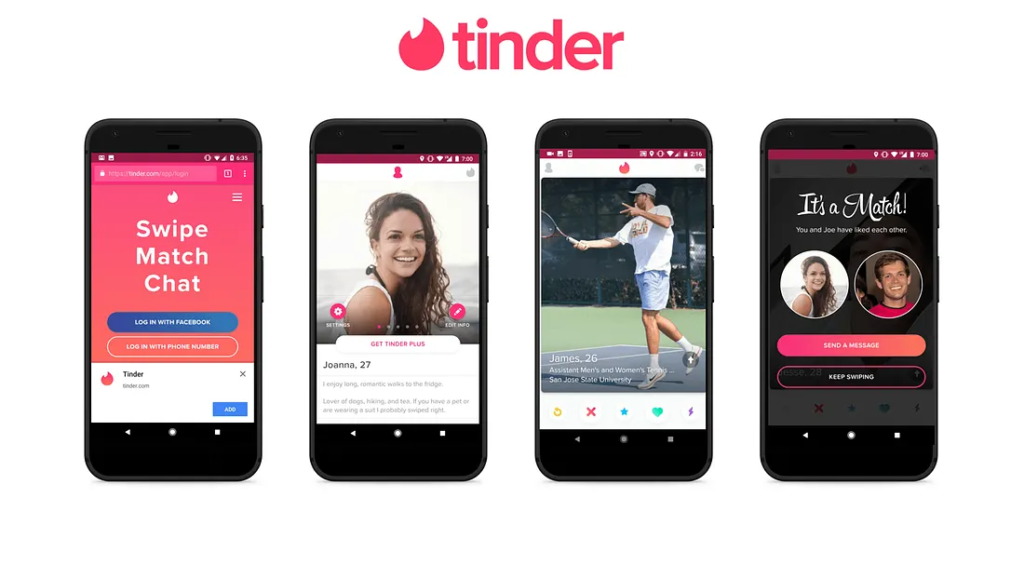
Through MVP app development, Tinder has gradually grown over time and extended its reach by introducing more features and adding more functionalities. They have made $1.94 billion in revenue in 2024, a 1.1% increase on the year prior. It had 60 million monthly active users and 9.6 million subscribers in 2024. And in 2026, the app had 75 million monthly active users (MAU) globally.
These data clearly say that building a minimum viable product (MVP) is a way to test the success of a business idea at a minimal cost. This incremental approach of starting from minimal features and scaling over time helps you minimize an initial investment as well as allow for flexible adaptation to users.
In this blog, we will discuss MVP development for startups, its benefits, how to develop it, cost, and many more things that will help you to know this approach inside out.
In simple words, MVP is the most basic version of a product with just enough features to be usable by early users and to validate the business idea. The following image shows what an MVP actually is for startups.
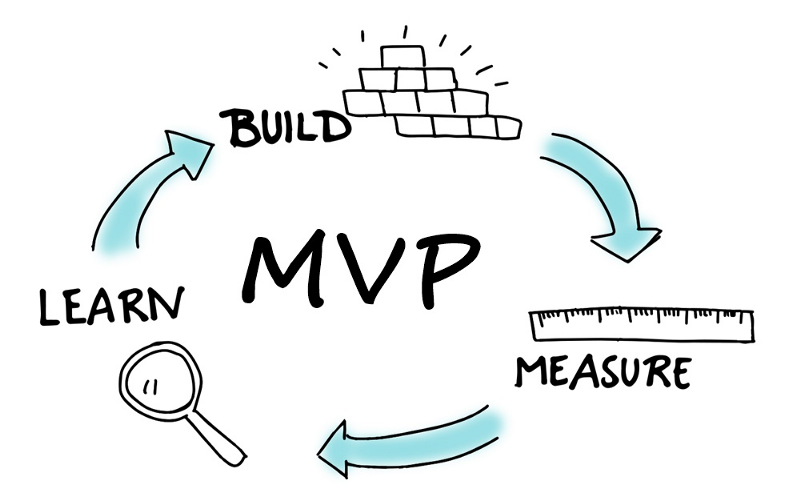
Now the question is, why should startups follow the MVP approach? MVP enables you to test your assumptions, understand your audience’s actual needs, and make data-driven improvements, all without committing substantial time or resources upfront. This approach helps reduce risk and ensures that the product you are building is agile with market demand.
The following are some important reasons why startups, SMBs, and even enterprises must invest in MVPs and consult the best app development company Toronto.
Startups often operate with uncertainty about user needs and preferences. MVP helps allow them to test their core idea with actual users and validate market demand before developing a fully functional app. It ensures that the product aligns with what users actually want.
Launching a fully functional app without testing can lead to significant financial losses if it fails to resonate with the targeted audience. The MVP development approach minimizes these risks by focusing on important features and gathering feedback early on, helping with adjustments before investments are made.
Startups can avoid wasting time and money on unnecessary features by developing an MVP. The MVP approach ensures that resources are directed toward what truly matters to the target audience, optimizing development processes and reducing waste.
Custom MVP development services allow startups to enter the market quickly, potentially outpacing competitors with similar ideas. The early-mover advantage can be important for establishing market presence and brand recognition.
A functional MVP demonstrates progress and viability, making it easier for startups to secure funding and gain investor trust. Investors are more likely to support projects that show tangible results and a clear growth path.
The following is the process that the leading mobile app development company Canada follows to build a successful MVP.
The first step of any mobile app development is conducting thorough market research. It will help you understand the growing needs of your target market and what they are looking for in a product or service. Many platforms conduct paid surveys and can help target the right respondents for your MVP in business.
After completing market research, the next step is to identify your target market and user persona. It includes identifying the demographics of your targeted niche by answering a few questions, like
After figuring out all the answers, you can easily determine who will use your MVP and what they are expecting from the particular app.
Now you have a complete idea of your target market and their needs, right? So, the next step is to outline the key features of your app. It includes identifying the core functionalities of your MVP solution and services. “Less is more” is what you need to always remember while choosing the MVP approach. Hence, you should focus only on the important features that address the needs of your targeted niche.
The feature list is ready! Now you can go ahead and build and launch an MVP. You can partner with the leading app development company in Toronto, like iQlance Solutions, to build a user-friendly product and make it available to the target market. This step also involves promoting your minimum viable product and getting user feedback for adding value to your app. The feedback you will receive will be invaluable, as it will help determine what features to add or remove and how to improve your app.
After launching an MVP, it’s time to analyze users’ feedback and figure out what is working and what is not. Remember, a minimum viable product will have flaws and areas of improvement. However, the feedback and data you receive will help refine your app and eventually develop a fully functional version for the end users.
| Type of MVP | Approximate cost (in CAD) | Tentative Time Taken | Inclusion |
|---|---|---|---|
| Simple/Basic MVP | $5,000 to $50,000 | 3 to 5 months | Core features, simple UI, limited, and no third-party integrations. |
| Mid-Level/Standard MVP | $15,000 to $100,000 | 4 to 9 months | Multiple workflows, dashboards, and moderate integrations. |
| Advanced/Enterprise MVP | $50,000 to $300,000 or more | 8 to 12 months or more | High security, AI, or complex, real-time features. |
| Team Structure | Approximate cost (in CAD) |
|---|---|
| Freelancers | $30,000 (best for tight budgets) |
| Offshore/Outsourcing | $11,999 to $36,000 |
| Local Canadian Agency | $70,000 to $180,000 or more |
| Factors | Details/Approximate cost (in CAD) |
|---|---|
| Feature Complexity | More complex features will cost you more. |
| Design Requirements | Template-based design: $3,000 to $8,000 (uses UI kits like Material Design) Custom design: $8,000 to $25,000 (unique brand identity, custom components) Premium design: $25,000 to $50,000 or more (animation, micro-interactions, illustration) |
| Platform Choice | Single platform: Launch on iOS or Android only ($15,000 to $40,000) Cross-platform: React Native or Flutter for both iOS/Android from one codebase ($25,000 to $70,000) Progressive Web App: Works on all devices through browsers ($20,000 to $50,000) All three separately: iOS, Android, and web with native code ($60,000 to $180,000) |
| Integrations and 3rd-party Services | Stripe payments: +$2,000 to $5,000 (setup, testing, handling webhooks) Google Maps: +$1,500 to $4,000 (integration, customization) Push notifications: +$1,000 to $3,000 (OneSignal, Firebase setup) Social login: +$1,500 to $3,000 per platform (OAuth, token management) Email service: +$1,000 to $2,500 (SendGrid, templates) Analytics: +$1,000 to $3,000 (Mixpanel, Amplitude setup) |
| Backend Complexity | Simple backend: Firebase/Supabase ($5,000 to $15,000) – CRUD operations, basic auth Custom API: Node.js, Python, or Rails ($15,000 to $40,000) – Business logic, integrations Complex backend: Microservices, real-time processing ($40,000 to $100,000+) – Scale, performance AI/ML components: Additional $20,000 to $80,000 depending on complexity |
| Team Structure and Location | In-house team: $25,000 or more per month Local agency: $50,000 to $150,000 Freelancers: $50 to $150/hour |
| Post-Launch Costs | Hosting: $50 to $500/month, depending on users and data Third-party services: $100 to $500/month (Stripe, SendGrid, AWS, etc.) Maintenance: $2,000 to $5,000/month for bug fixes and updates Iteration: $10,000 to $30,000 over 6 months based on user feedback |
The following are different types of MVPs that you should know as a startup. The best app development company Toronto guides you with all the MVP models and helps you to choose the best fit for your app idea.
A concierge MVP flips the idea of automation on its head. Instead of building a fully functional product, you manually deliver the service to early customers. This approach includes:
You can create the illusion of a complete product with the Wizard of Oz MVP approach. But behind the scenes, everything is operated manually. The following is how this approach works:
A single-feature MVP focuses on delivering one core functionality of the product that addresses a specific user problem. Instead of building a product with a suite of features, this approach prioritizes simplicity and direct value.
A piecemeal MVP leverages existing tools, technologies, and services to create a functional product prototype without starting the development process from scratch. This type of MVP combines off-the-shelf components to deliver a coherent experience to users.
A high-fidelity MVP app development is a more polished, functional version of your product. It closely resembles the final product, offering a better UX, but it needs more resources to develop.
A low-fidelity MVP is a basic and cost-effective prototype designed to test the core concept or validate the initial idea quickly.
A landing page MVP is one of the simplest and most effective ways to validate a product idea before diving into the full-scale development process. It involves creating a single webpage designed to:
Provide calls to action (CTAs): Add sign-up forms, learn more buttons, or pre-order options to measure user interest. CTAs help collect valuable data, like the number of visitors who are willing to engage or leave their email address.
1. Defining the Right Scope: Startups often struggle to identify which features should be included in the MVP and which should be left for future updates. Choosing the wrong scope can either make the product too basic or unnecessarily complex.
2. Budget and Resource Constraints: Limited funding and smaller teams can make it difficult for startups to manage development costs, hire skilled developers, and maintain consistent progress during the MVP development process.
3. Balancing Speed with Quality: Since MVPs are meant to launch quickly, many startups face the challenge of maintaining app quality, performance, and stability while trying to reduce development time.
4. Gathering Accurate User Feedback: Collecting meaningful feedback from early adopters can be difficult, as users may provide unclear suggestions or feedback that does not align with the product’s core objective.
5. Overcoming Technical Limitations: Many startups lack technical expertise when choosing the right technology stack, integrations, or architecture, which can affect the scalability and performance of the MVP.
Turning a great idea into a successful product requires the right strategy, technology, and development partner. This is where iQlance Solutions comes in. As a trusted mobile app development company Canada, we help startups and growing businesses transform their innovative ideas into scalable digital products through efficient MVP app development services.
Our team focuses on building a functional MVP that includes only the most important features needed to validate your business idea in the real market. Instead of spending months and a large budget on a fully developed product, we help you launch quickly with a streamlined solution that gathers actual user feedback and market insights.
We follow a structured development approach that begins with understanding your business objectives, target audience, and product vision. Our experienced developers, designers, and strategists work collaboratively to identify the core functionalities required for your MVP. This ensures that your product solves a real problem while maintaining simplicity, usability, and performance.
As a reliable app development company Toronto, we also prioritize scalable architecture and future-ready technology. This means the MVP we build today can easily grow into a fully functional application as your business grows and new user requirements emerge. Our team carefully selects the right technology stack, development framework, and integrations to ensure flexibility, security, and long-term sustainability.
Another key advantage of partnering with iQlance Solutions is our focus on cost optimization. We help startups avoid unnecessary development expenses by prioritizing essential features, adopting agile methodologies, and delivering iterative updates based on user feedback. This approach not only reduces the initial investment but also helps businesses make data-driven improvements over time.
From idea validation and UI/UX design to development, testing, and deployment, iQlance Solutions provides end-to-end mobile app development services custom to the unique needs of startups and enterprises. With a proven track record of delivering high-quality applications across various industries, we support businesses to launch faster, reduce risk, and achieve sustainable growth in the competitive digital marketplace.
If you are planning to launch a startup or test a new product idea, partnering with an experienced mobile app development company Canada like iQlance Solutions can help you build a reliable and cost-effective MVP that sets the foundation for long-term success.
Partner with our experts to design, build, and launch scalable mobile and app solutions that drive measurable business growth.
 Canada


