How to Create an App in Canada: The Complete 2026 Guide

Think about the last time you called a company to book an appointment, check a balance, or place an order. You probably didn’t; you tapped an app instead. That shift in customer behavior is exactly why mobile app development companies in Canada are building mobile apps.
Canada’s digital economy is no longer a ‘future trend.’ It’s the operating reality. And businesses that don’t meet customers where they are, on their phones, are quietly falling behind those that do. The following states show the current scenario of the Canadian mobile app market.
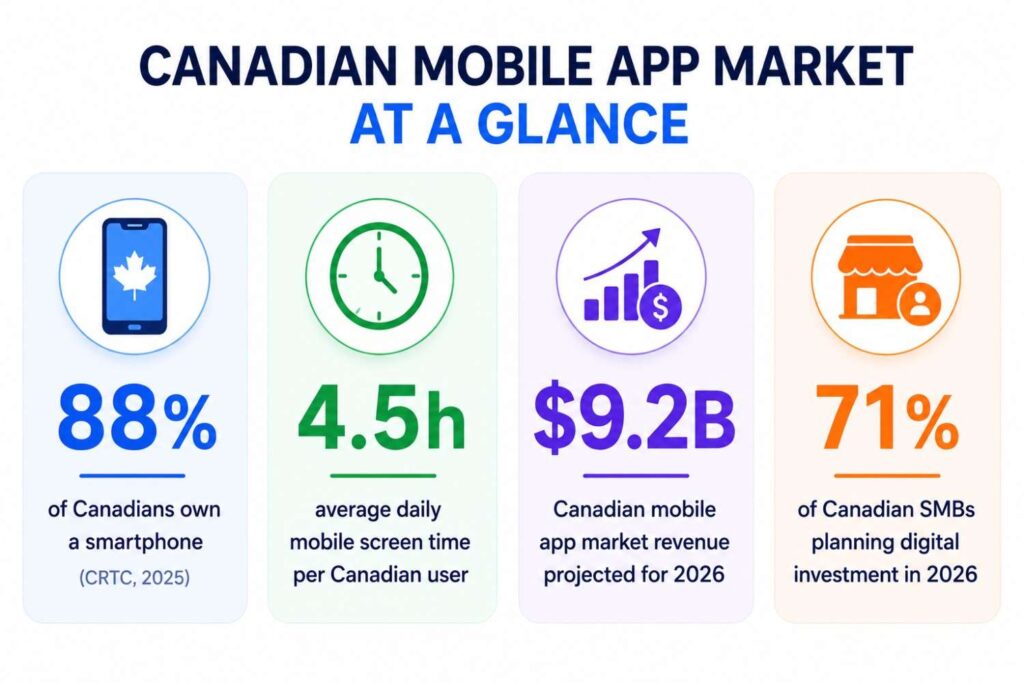
This guide is written for Canadian businesses that are thinking seriously about building an app but are not yet sure where to start, what it costs, or how to avoid expensive mistakes. No fluff, just a clear, step-by-step picture of what building a mobile app in Canada actually looks like in 2026.
Why Mobile Apps Are Becoming Essential for Canadian Businesses
A mobile app isn’t a fancy project. For businesses that do it right, it becomes the single most important customer touchpoint they own. Here is why Canadian companies across every industry are investing:
| Sr. No. | Business Goal | How an App Helps | Industry Example (Just for reference) |
|---|---|---|---|
| 1 | Customer Retention | Push notifications, loyalty programs, and personalized offers | Retail, e-commerce |
| 2 | Operational Automation | Booking, scheduling, and inventory are handled in-app without staff | Logistics, healthcare |
| 3 | AI-Powered CX | Chatbots, smart recommendations, predictive features | Fintech, SaaS |
| 4 | Competitive Advantage | Be the first in your niche with a native mobile experience | Real estate, insurance |
| 5 | Omnichannel Commerce | Seamless web + mobile + in-store experience | Retail, hospitality |
Whether you are a clinic managing patient appointments, a logistics startup optimizing delivery routes, or a SaaS company building tools for enterprise clients, a mobile app is increasingly the most direct path between your business and your customer.
What Type of App Should You Build?
Before you hire anyone or set a budget, the first actual decision is understanding which type of app fits your goals. This affects cost, timeline, and technology choices more than almost anything else.
| App Type | Best For | Cost Range | Performance | Scalability |
|---|---|---|---|---|
| Native iOS/Android | Enterprise, complex features | High | Excellent | Excellent |
| Flutter | Startups, fast cross-platform builds | Medium | Very Good | High |
| React Native | SMBs, existing web teams | Medium | Good | High |
| Progressive Web App (PWA) | Budget-first businesses | Low | Moderate | Moderate |
| AI-Powered App | Data-driven, personalization-heavy products | High | Excellent | Excellent |
| SaaS Platform | B2B software, subscription products | High | Very Good | Excellent |
For most Canadian startups and SMBs, Flutter or React Native hits the sweet spot: strong performance, cross-platform reach (iOS + Android at once), and a significantly lower cost than building two separate native apps.
Step-by-step Guide to Building an App in Canada
(1) Define the Business Problem
A successful app solves a real, specific problem, not a vague one. Before development begins, validate your idea against the market. Question to ask before you build:
- What exact problem does this app solve, and for whom?
- Who are your top 3 competitors, and what do they get wrong?
- Would your target customer pay for this or just use it for free?
- Can you describe the app’s core use in one sentence?
- Have you spoken to at least 10 potential users before building?
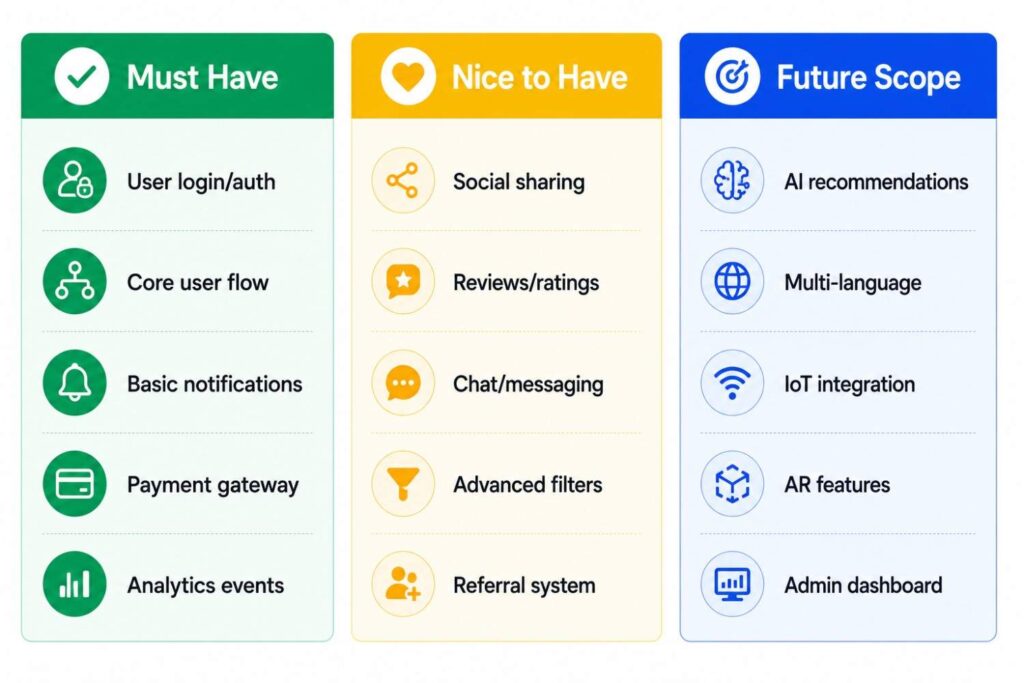
(2) Choose the Right App Features
One of the biggest budget-killers is trying to build everything at once. Use a feature prioritization matrix to stay focused:
(3) Decide Your Budget
Most businesses underestimate what app development actually costs, not because they are deceived, but because no one explains what drives the numbers. Understanding mobile app development cost in Canada means looking beyond just ‘development.’ The following are some hidden costs most businesses forget to count:
- App store fees: Apple: CAD $129/year; Google: USD $25 one-time
- Cloud hosting: CAD $200 to $2000+ per month, depending on scale
- Third-party APIs (maps, payments, AI, SMS): CAD $500 to $5000 per month
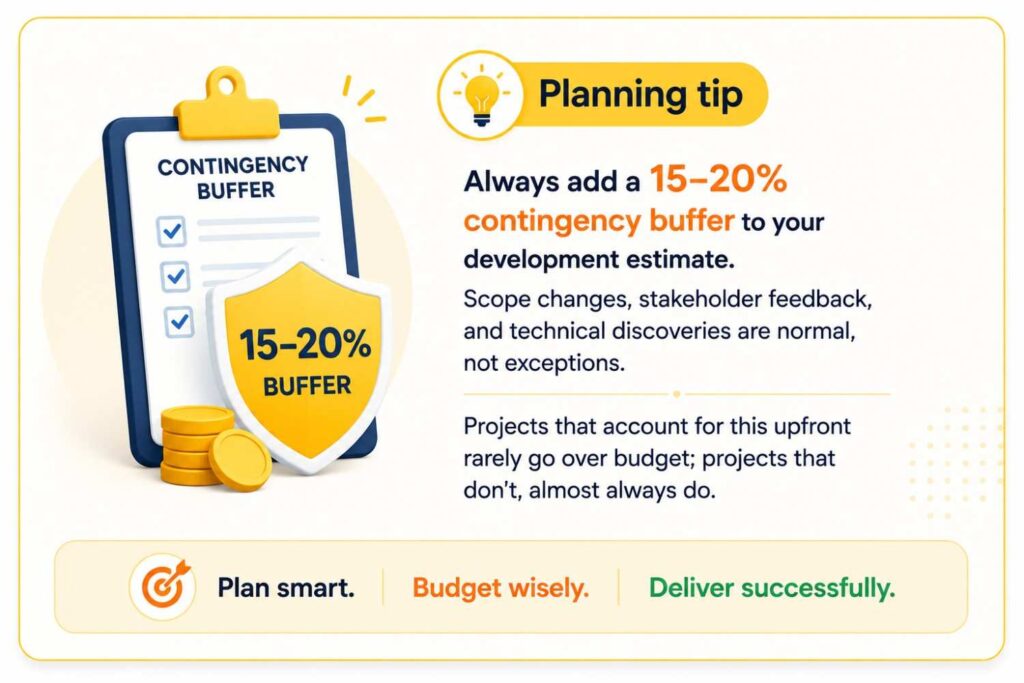
- Post-launch maintenance: Typically 15-20% of development cost annually
- UI/UX design: Often a separate line thing from development
(4) Choose the Right Technology Stack
| Layer | Recommended Technologies (2026) |
|---|---|
| Frontend / Mobile | Flutter, React Native |
| Backend | Node.js, Python (FastAPI) |
| Database | PostgreSQL, MongoDB, Supabase |
| Cloud | AWS, Azure, Google Cloud |
| AI Integration | OpenAI APIs, Google Vertex AI |
| DevOps / CI-CD | GitHub Actions, Docker, Kubernetes |
(5) Hire an App Development Company or Team
This is the single decision that will make or break your project. Here is how the key options compare:
| Option | Best For | Average Cost | Risk Level |
|---|---|---|---|
| Freelancers | Small, remote tasks | Lowest | High |
| In-house Team | Ongoing, large-scale product | Highest | Low |
| Canadian Agency | Accountability + local understanding | Medium to high | Low |
| Offshore Agency | Budget-conscious projects | Low to medium | Medium |
When you hire dedicated developers, you get a team fully focused on your product, with no context switching and no divided attention. For most Canadian businesses building their first serious product, partnering with a trusted mobile app development company in Canada delivers the best balance of cost, accountability, and quality.
(6) UI/UX Design Process
Good design is not just visual appeal; it’s the difference between an app users love and one they delete after the first session. The process typically involves wireframes (low-fi layouts), interactive prototypes, user journey mapping, accessibility testing, and design system creation. In 2026, dark mode support and AI-driven UX personalization are expected to be increasingly available, not optional.
(7) Development Phase
Professional development teamwork in Agile sprints, typically 2-week cycles, where features are built, reviewed, and tested continuously. This avoids the nightmare of a 6-month ‘big reveal’ that turns out to need major rework. Key practices include sprint planning, QA cycles within each sprint, DevOps automation, and CI/CD pipelines that push updates without downtime.
(8) Testing & Compliance
Canadian businesses have specific legal obligations that don’t apply everywhere:
- PIPEDA Compliance: Canada’s federal privacy law governs how you collect and use personal data
- GDPR: Required if you serve users in the EU at any point
- WCAG 2.1 Accessibility: Increasingly mandated for public-facing Canadian apps
- App Store Review Guidelines: Apple and Google both enforce strict content and privacy rules
(9) Launch Your App
A launch without a plan is just publishing. Smart launches involve a beta release to a small user group, App Store Optimization (ASO) to improve discoverability, launch analytics set up before go-live, and a coordinated marketing push across email, social, and paid channels.
(10) Post-launch Maintenance
An app is never ‘done.’ OS updates, new devices, user feedback, and competitive pressure mean you’ll be iterating continuously. Budget for ongoing monitoring, regular feature releases, security patches, and, increasingly in 2026, AI model updates that keep personalization features accurate and relevant.
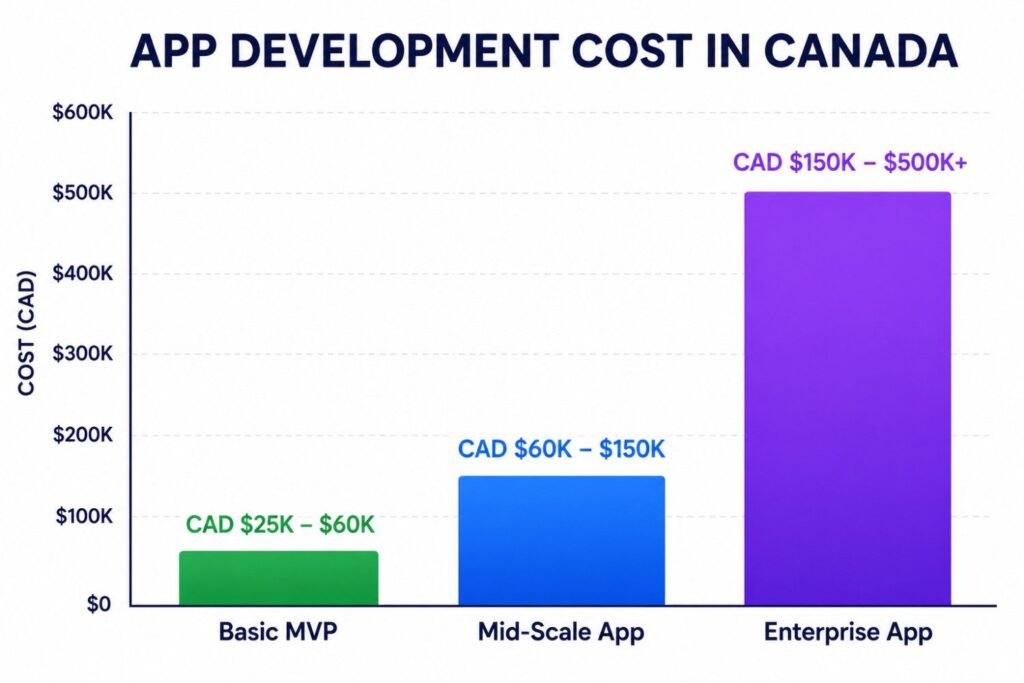
How Much Does It Cost to Create an App in Canada?
Understanding the mobile app development cost in Canada starts by separating what drives price from what’s just making fluff. Here is a factual breakdown:
| Cost Factor | Why IT Matters | Typical Impact on Budget |
|---|---|---|
| Number of Features | Each feature = design + dev + QA time | Very high |
| Third-party Integrations | Payment gateways, CRMs, maps, and AI APIs | High |
| AI Features | Custom model training adds high cost | High |
| UI/UX Complexity | Custom animations and design = more hours | Medium to High |
| Security Requirements | FinTech and Health apps need extra layers | Medium |
| Team Location | Canadian rates vs. offshore significantly differ | Very High |
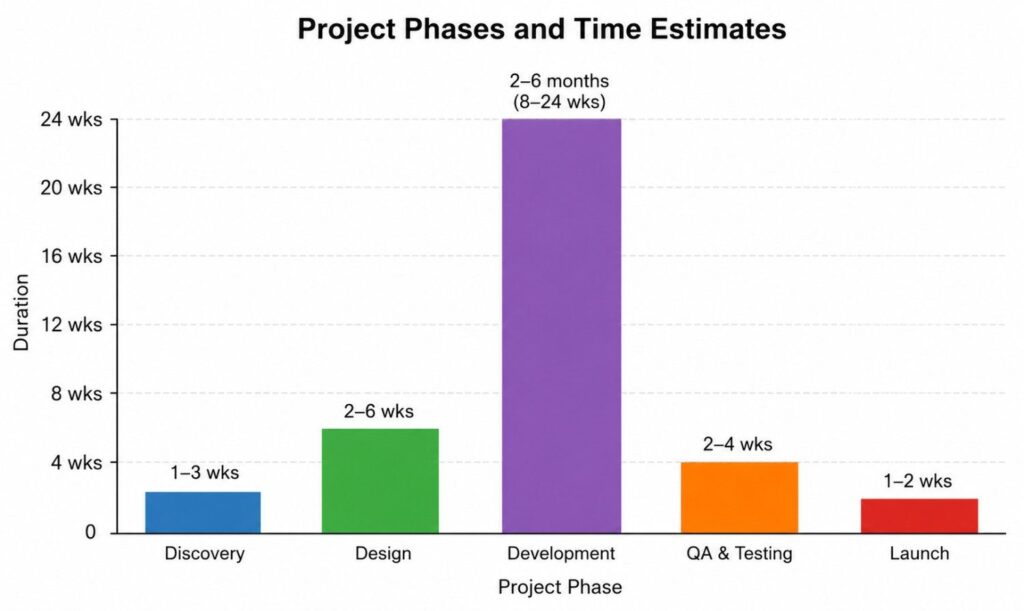
App Development Timeline in Canada
Common Challenges While Building an App
Most app projects that go sideways don’t fail because of bad ideas. They fail because of avoidable process mistakes. Here is what to watch for and how to avoid it:
| Challenge | What It Looks Like | How to Avoid It |
|---|---|---|
| Scope Creep | “Can we just add more features?” – repeatedly | Lock the MVP scope before development begins; use a change order process |
| Budget Overruns | Running out of money with 30% left to build | Phase-based releases; keep 20% contingency budget |
| Poor UX | Users can’t figure out how to use the core flow | User test with real people before final development |
| Wrong Agency | Missed deadlines, no accountability, poor communication | Check references; review live past work, not just screenshots |
| Scalability Issues | The app crashes when traffic spikes | Design for scale from day one: use cloud-native architecture |
| AI Integration Confusion | Adding AI without a clear use case or budget | Define exactly what AI feature solves for the user before building |
Why Most Canadian Businesses Start with an MVP
An MVP (minimum viable product) is not a cheap and half-developed version of your app. It’s the least expensive version that delivers real value and lets you learn from actual users before investing in the full build.
| Factor | MVP Approach | Full Product Build |
|---|---|---|
| Time to Market | 2 to 4 months | 6 to 14 months |
| Upfront Investment | Lower | Much Higher |
| Investor Validation | Easier with live data | Harder pre-launch |
| User Feedback | Built into the process | Comes late |
| Risk level | Lower | Higher |
Many Canadian startups choose MVP development first to validate product-market fit before committing to full-scale investment. The goal is not to build less; it is to learn faster. iQlance helps Canada-based businesses define and build strategic MVPs that generate real traction.
How to Choose the Right App Development Company in Canada
This is where the biggest mistakes happen. Choosing the wrong partner costs time, money, and sometimes the entire project. Whether you are looking at app development Toronto companies or coast-to-coast Canadian agencies, use the following checklist:
Green Flags to Watch For
✔️ They sign an NDA and provide clear IP ownership from day one
✔️ They have a portfolio with live, downloadable apps, not just mockups
✔️ They have worked in your industry or a closely related one
✔️ They have experience with AI-ready architecture in past projects
✔️ They use Agile methodology with sprint-based reporting
✔️ They offer post-launch support and maintenance, not just “build and goodbye.”
✔️ They understand Canadian-specific compliance (PIPEDA, AODA, provincial privacy laws)
✔️ They ensure 100% IP-ownership transfer after compilation of the project
Red Flags to Watch For
❌ Unrealistically low pricing (often signals offshore subcontracting without disclosure)
❌ No post-launch support plan
❌ Vague about who actually owns the code after delivery
❌ No NDA or data security process
❌ Showing mockups for “past projects,” they can’t reveal live
When you decide to hire dedicated developers, the right team will feel less like a development company and more like a technology partner, invested in your outcome, not just billing hours.
Looking for anapp development Toronto option? iQlance works with startups, SMBs, and enterprises across Canada with full-cycle delivery, from discovery to post-launch support.
Future of Mobile App Development in Canada (2026-2027)
The businesses building apps today are making architectural decisions that will either put them ahead or force expensive rebuilds in 2027. Here is what is shaping the standards:
- AI-powered apps with built-in personalization
- Voice interfaces (Siri, Google, custom NLU)
- Hyper-personalization at the user level
- Super apps (one app, multiple services)
- IoT integration for hardware-connected products
- Low-code acceleration for internal tools
- AI copilots embedded inside apps
- On-device AI (reduced cloud dependency)
The trend that matters most: AI is no longer a premium add-on. Users in 2026 increasingly expect apps to anticipate their needs, not just respond to them. If your app does not have a clear AI roadmap, your product planning should start there.
Frequently Asked Questions

 Previous Briefing